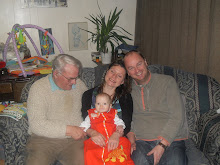
A Reflection for Easter. Andrew Bebb
I remember many years ago watching an interview on the television. The theme appeared to be an exploration of the problem of evil and suffering in human life. The interviewer had chosen to interview a fairly young couple. They were sitting together on a sofa in a modestly furnished room of a rented council house in the North of England. Held against the bosom of the woman, with her arms clasped around the neck of her mum and her legs around her waist, was a young girl, about four years old. Although the child’s eyes were open, they were expressionless as was the young girl’s face. The mouth hung open and the tongue lolled within it. The child’s body was quite incapable of any independent movement or response, let alone that of speech.
We learned from the interviewer that the child was bereft of any form of communication and every movement had to be gently controlled by the parents. We were shown a scene in the small garden at the back of the house where the child had been brought to enjoy the sun and fresh air. Although there was no indication of any pleasure in the child’s demeanour.
The interviewer began to probe the feelings of the parents.
‘Here you are,’ he said, ‘I understand that you are unable to have any other child. She is the only child you will ever have. This little girl you are holding is quite unable to make any kind of reaction to your loving and gentle handling of her. So it will continue for many years into the future. Do you not think that you have been dealt a very unjust hand? Do you not feel any bitterness because of it?’
The young father looked at his wife in bemusement and for a while there was silence. ‘I don’t know about that’ he said, ‘I don’t think we’ve ever thought about it. One thing we do know though. Our little girl will know only one thing in her life. That is the love that we give her. To take that away. That would be an injustice.’
For myself, I have never forgotten that image. It was the finest expression of human dignity I have ever encountered. It has helped me to begin to understand the place of suffering and imperfection in human life. Let me try to explain how.
That little girl with all her limitations and total self-enclosure had managed to draw out of her parents a depth of selfless love and joy that most of us will never begin to educe from those we spend our lives among. It helped me to begin to understand the meaning and purpose of God in creating this so imperfect world.
Again many years ago as a young adolescent, I remember reading in the preface of a missionary magazine a mysterious phrase. ‘It is the sinner,’ it said strangely ‘who is closest to the heart of Christ.’ It has taken me many years even to begin to understand that odd statement.
We spend our lives in a broken, imperfect world. Love grows out of our outstretched hands. As we reflect upon, admit, and accept our imperfections, our sinfulness, our unattractiveness, our abiding weaknesses, our hidden shames, we open up a space for love to be generated in the enclosed hearts of others and through them to the God who cares beyond all imaginings. The One who numbers the hairs on our head, who knows the dying flight of the sparrow as it plunges to the earth.
It is only in our emptiness and fragility that there can be room for love to enter in.
When on Easter morning, the Deacon sings that great hymn of joy, the Exultet, he sings of that ‘happy fault which merited so great a Redeemer’. It seems such a strange thing to be joyful for! Original sin? Our weaknesses? Our propensity to shame ourselves with our failings? Surely not.
And yet that is precisely what the whole Church rejoices in as it celebrates the resurrection of Christ.
It is the sinner kneeling in the shadows beating his breast muttering: ‘Lord, have pity on me, an unworthy outcast’, who goes back to his house justified, not the boastful righteous ones who are busy congratulating themselves on their piety standing at the front. It is the criminal hanging on his gallows beside Jesus and asking to be remembered in the Kingdom, who is promised a place in Paradise that very day!
These are the chosen ones. What a strange message does the Lord bring! He comes to call sinners not the upright!
Deep in shame
Years of perfidy
Pressed down upon me.
In the bench
Beyond the sacred encounter
Quiet tears ran.
The unseen head pressed upon my chest.
‘Be still. All is well’
Tuesday, 7 September 2010


Above thje Storm the Smallest Prayer Andrew Bebb
Above the storm, the smallest prayer. Andrew Bebb
I remember as a small child, diligently poring over the many questions and answers in the old penny catechism, being mystified by the questions about God. With the approval of the Holy Child nuns responsible for my induction into the nuances of Catholic belief, I was able to recite that ‘God is a Supreme Spirit who alone exists of Himself and is infinite in all His perfections’ and moreover that ‘God is everywhere’. And all that in the first three pages! . The notion that puzzled me most was this idea that God is everywhere. I could cope with the notion that my Guardian Angel was always around, keeping what I hoped was a benevolent eye on me. He (or she) I understood, was always on my side even if they might blush at my unseemly actions on occasion. But the idea of God being everywhere was a bit difficult. The idea of being under constant surveillance was not a very appealing one! There was ‘no hiding place’ it seemed. Whatever the level of my understanding at the time, at least the formulas stuck around in my mind and continued to echo when I enrolled as a student of theology reading the great Summa of St.Thomas Aquinas. Even there it wasn’t easy. Thomas told us that apart from the revelation made by God through the Incarnation of His Word, the only intellectual thing we can say about God is to state what he isn’t! He calls it the ‘via negativa’, the negative way. God is not finite, He is not constrained by the limitations of space or time, and He is not created, and so on. In fact Paul Tillich, the 20th. Century Lutheran theologian went so far as to claim that: ‘it is as atheistic to say that God exists as to say that He doesn’t exist’ on the grounds that to say that God exists is to make God into an object existing alongside other objects. All very difficult!
.
Tillich however was a Protestant and had none of the Catholic and Orthodox understanding of the ‘real sacramental presence of God’s self revelation in the created world around us’. It is in that real presence that we encounter God’s proximity and inwardness. The Orthodox Churches use the term ‘Mysterion’ or ‘Ikon’ for that which we in the West describe as ‘Sacrament’ It is not simply a question of learning about God. It is in the form of an encounter with Him: whether in the created world around us, in other people or in the self-revelations He makes in the Word incarnated in the scriptures and finally and completely in His Son, Jesus in his Eucharistic presence.
If only the catechism had started the other way round. Can we forget the abstractions and concentrate on the concrete? Where out of our ‘unknowing’ may we encounter God? Let’s get rid of all our preconceptions, whether from philosophy or from the imaginative projections of primitive peoples who needed something outside themselves to worship or to protect them from the unpredictable.
I think that perhaps the catechism was starting at the wrong end. Abstractions are difficult enough for most of us even when we are adults. It reminds me of the story of the good nun trying to prepare her young pupils for the visit of the Diocesan Inspector She primed them to be able to respond to the examination by learning one answer each. The idea was that when the Priest asked a question from the catechism the child whose answer it was would raise a hand and reply. Unfortunately when the Priest asked: ‘Who made you?’ there was silence until a child said: ‘The girl that God made is away today, Father.’
Anyway to move on..
Let’s go back to the roots of our knowledge of God in the Gospel and in the life of the Church’s faith.
When Philip the Apostle, in his bewilderment, asked Jesus, before He left them, ‘Show us the Father’ the almost withering answer he received must have made Philip feel a little humiliated. John in his gospel remembers the incident well. John of course in subsequently composing his gospel recognised the presence of God in every sign and action and saying of Jesus. ‘Have I been with you all this time, Philip,’ said Jesus, ‘and you still do not know me? How can you say “show us the Father? Did you not know that if you have seen me, you have seen the Father?” What a staggering statement!
Tillich in once sense was right. There is nothing we are able to know rationally and directly of God’s existence or His nature. To attempt to do that is to project our own images upon that simple word, God.
But for the fact that in His graciousness, God has taken the initiative and revealed Himself sacramentally to us in his creative activity and ultimately in the human life, death and resurrection of His Son Jesus, we can know little about him. He remains a closed book subject to our conjectures.
There is here a kind of analogy of this in our own human relationships. What indeed can we know of one other, except insofar as we take the initiative and open ourselves up to one another? Otherwise we and they remain simply objects in a world of other objects! We simply slot people, and indeed our self, somewhere into our personal data banks. We tend to put them into the correct slot in our list of categories: old, young, middle aged, priest, layperson, immigrant, mentally ill, etc. etc. What do I really know even of the person beside me during Mass except for the (hopefully) fleeting smile during the kiss of peace! (Unless of course it happens to be a personal friend or my wife!!) Other people remain a mystery until they or I take the initiative and open up ourselves to one another in the great risk of self-exposure. And it is a great risk! A friendly loving approach can lead to great pain and anguish when the offer of intimacy and openness is abused, derided or betrayed.
This leads me on to another of those difficult catechism questions.
‘What is faith? - Faith is a supernatural gift of God which enables me to believe without doubting whatever God has revealed.’
Is it simply that? A question of simply wrapping your mind around statements of doctrine without understanding or joy? In moments of doubt just gritting your teeth and carrying on as faithfully as you can?
Not really.
God took the incredible risk of opening Himself up to us in His enormous act of faith in humanity. It was his eternal act of self-exposure. As Paul said, He loved us whilst we were still in our sins. It is his initiative entirely. We are utterly undeserving of it. This is really what the act of faith is. There can be no guarantee that the gift will not be hurled back into the face of the One who has the temerity to make it. It is open to derision, to abuse, to rejection. We can recognise this in the human history of Jesus the son of Mary.
Just as the act of self-revelatory faith which God continues to make in this world in which we live, can be abused, manipulated and destroyed for gain and profit, so the men and women through whom he comes to us as his real presence in our daily lives can become simply objects for competition, or manipulation or fear or abuse.
All we need is faith. A faith which includes both courage and daring.
Before coming to live here in Liverpool, my family and I spent ten idyllic years living in a converted farmhouse in a little village on the banks of the river Tamar in Cornwall. I was working as Head of Divinity at an Anglican college on the outskirts of Plymouth. Since living here for the past twenty odd years, I have often been asked whether I have any regrets about moving to Liverpool. My reply has often surprised the enquirer. ‘Were I to choose any place to live in this country, I would choose to live here.’
I remember catching a black cab back to Lime Street station after attending an interview at what is now called Liverpool Hope University. The job was Head of Theology. In that cab was my first encounter with a typical ‘scouser’. In the course of the short journey we exchanged an unbelievable amount of friendly details of our personal lives and so developed a mutual act of faith in one another! I am still impressed. Journeys using my free bus pass into town or more recently to Morrison’s, have almost always led to friendly brief conversations with my fellow travellers- especially the ‘golden oldies’ like myself. Often the best experiences of this mutual faith occur in the pub! Particularly the Gardener’s in Woolton near my son’s house! (No advertising fee!)
That’s Liverpool.
I remember as a small child, diligently poring over the many questions and answers in the old penny catechism, being mystified by the questions about God. With the approval of the Holy Child nuns responsible for my induction into the nuances of Catholic belief, I was able to recite that ‘God is a Supreme Spirit who alone exists of Himself and is infinite in all His perfections’ and moreover that ‘God is everywhere’. And all that in the first three pages! . The notion that puzzled me most was this idea that God is everywhere. I could cope with the notion that my Guardian Angel was always around, keeping what I hoped was a benevolent eye on me. He (or she) I understood, was always on my side even if they might blush at my unseemly actions on occasion. But the idea of God being everywhere was a bit difficult. The idea of being under constant surveillance was not a very appealing one! There was ‘no hiding place’ it seemed. Whatever the level of my understanding at the time, at least the formulas stuck around in my mind and continued to echo when I enrolled as a student of theology reading the great Summa of St.Thomas Aquinas. Even there it wasn’t easy. Thomas told us that apart from the revelation made by God through the Incarnation of His Word, the only intellectual thing we can say about God is to state what he isn’t! He calls it the ‘via negativa’, the negative way. God is not finite, He is not constrained by the limitations of space or time, and He is not created, and so on. In fact Paul Tillich, the 20th. Century Lutheran theologian went so far as to claim that: ‘it is as atheistic to say that God exists as to say that He doesn’t exist’ on the grounds that to say that God exists is to make God into an object existing alongside other objects. All very difficult!
.
Tillich however was a Protestant and had none of the Catholic and Orthodox understanding of the ‘real sacramental presence of God’s self revelation in the created world around us’. It is in that real presence that we encounter God’s proximity and inwardness. The Orthodox Churches use the term ‘Mysterion’ or ‘Ikon’ for that which we in the West describe as ‘Sacrament’ It is not simply a question of learning about God. It is in the form of an encounter with Him: whether in the created world around us, in other people or in the self-revelations He makes in the Word incarnated in the scriptures and finally and completely in His Son, Jesus in his Eucharistic presence.
If only the catechism had started the other way round. Can we forget the abstractions and concentrate on the concrete? Where out of our ‘unknowing’ may we encounter God? Let’s get rid of all our preconceptions, whether from philosophy or from the imaginative projections of primitive peoples who needed something outside themselves to worship or to protect them from the unpredictable.
I think that perhaps the catechism was starting at the wrong end. Abstractions are difficult enough for most of us even when we are adults. It reminds me of the story of the good nun trying to prepare her young pupils for the visit of the Diocesan Inspector She primed them to be able to respond to the examination by learning one answer each. The idea was that when the Priest asked a question from the catechism the child whose answer it was would raise a hand and reply. Unfortunately when the Priest asked: ‘Who made you?’ there was silence until a child said: ‘The girl that God made is away today, Father.’
Anyway to move on..
Let’s go back to the roots of our knowledge of God in the Gospel and in the life of the Church’s faith.
When Philip the Apostle, in his bewilderment, asked Jesus, before He left them, ‘Show us the Father’ the almost withering answer he received must have made Philip feel a little humiliated. John in his gospel remembers the incident well. John of course in subsequently composing his gospel recognised the presence of God in every sign and action and saying of Jesus. ‘Have I been with you all this time, Philip,’ said Jesus, ‘and you still do not know me? How can you say “show us the Father? Did you not know that if you have seen me, you have seen the Father?” What a staggering statement!
Tillich in once sense was right. There is nothing we are able to know rationally and directly of God’s existence or His nature. To attempt to do that is to project our own images upon that simple word, God.
But for the fact that in His graciousness, God has taken the initiative and revealed Himself sacramentally to us in his creative activity and ultimately in the human life, death and resurrection of His Son Jesus, we can know little about him. He remains a closed book subject to our conjectures.
There is here a kind of analogy of this in our own human relationships. What indeed can we know of one other, except insofar as we take the initiative and open ourselves up to one another? Otherwise we and they remain simply objects in a world of other objects! We simply slot people, and indeed our self, somewhere into our personal data banks. We tend to put them into the correct slot in our list of categories: old, young, middle aged, priest, layperson, immigrant, mentally ill, etc. etc. What do I really know even of the person beside me during Mass except for the (hopefully) fleeting smile during the kiss of peace! (Unless of course it happens to be a personal friend or my wife!!) Other people remain a mystery until they or I take the initiative and open up ourselves to one another in the great risk of self-exposure. And it is a great risk! A friendly loving approach can lead to great pain and anguish when the offer of intimacy and openness is abused, derided or betrayed.
This leads me on to another of those difficult catechism questions.
‘What is faith? - Faith is a supernatural gift of God which enables me to believe without doubting whatever God has revealed.’
Is it simply that? A question of simply wrapping your mind around statements of doctrine without understanding or joy? In moments of doubt just gritting your teeth and carrying on as faithfully as you can?
Not really.
God took the incredible risk of opening Himself up to us in His enormous act of faith in humanity. It was his eternal act of self-exposure. As Paul said, He loved us whilst we were still in our sins. It is his initiative entirely. We are utterly undeserving of it. This is really what the act of faith is. There can be no guarantee that the gift will not be hurled back into the face of the One who has the temerity to make it. It is open to derision, to abuse, to rejection. We can recognise this in the human history of Jesus the son of Mary.
Just as the act of self-revelatory faith which God continues to make in this world in which we live, can be abused, manipulated and destroyed for gain and profit, so the men and women through whom he comes to us as his real presence in our daily lives can become simply objects for competition, or manipulation or fear or abuse.
All we need is faith. A faith which includes both courage and daring.
Before coming to live here in Liverpool, my family and I spent ten idyllic years living in a converted farmhouse in a little village on the banks of the river Tamar in Cornwall. I was working as Head of Divinity at an Anglican college on the outskirts of Plymouth. Since living here for the past twenty odd years, I have often been asked whether I have any regrets about moving to Liverpool. My reply has often surprised the enquirer. ‘Were I to choose any place to live in this country, I would choose to live here.’
I remember catching a black cab back to Lime Street station after attending an interview at what is now called Liverpool Hope University. The job was Head of Theology. In that cab was my first encounter with a typical ‘scouser’. In the course of the short journey we exchanged an unbelievable amount of friendly details of our personal lives and so developed a mutual act of faith in one another! I am still impressed. Journeys using my free bus pass into town or more recently to Morrison’s, have almost always led to friendly brief conversations with my fellow travellers- especially the ‘golden oldies’ like myself. Often the best experiences of this mutual faith occur in the pub! Particularly the Gardener’s in Woolton near my son’s house! (No advertising fee!)
That’s Liverpool.
Sunday, 5 September 2010
Belonging Andrew Bebb
The birds of the air have their nests.
One of the most painful experiences is, I think, that of feeling that you do not belong. The feeling that you are an ‘outsider’. An outsider in a group, a place, and most painfully of all, in ‘anywhere’ at all. Some of us may have experienced something of that particular experience during the time of our adolescence. The increasing number of self-harm incidents and suicides among the young is maybe a testament to that.
I recall occasions in the past when I have been attending conferences, usually of an academic and theological nature, when, at least for the first day or two, this feeling has predominated. There have always been those who seem to relish the situation and quickly become the focus of attention either by their humour and self-confidence or by the respect they feel entitled to attract because of their expertise. For me, I have usually looked to gravitate towards someone sitting quietly in the corner of the bar, looking equally disconnected. Some have described it in the past as ‘having an inferiority complex’. Perhaps accurately. Maybe in the circumstances, it was the constant awareness of the many lacunae in my classical and neo-classical education. After all, my initial contact with the aroma of ‘Higher Education’ had been in the field of Mathematics and Structural Engineering, certainly not in the area of poetry, literature or theology. It has of course become easier as the time passes and the focus of attention has been on the lectures or seminars But that feeling of ‘not really belonging’ has often been there.
I suppose the concomitant sensation is that of ‘loneliness’.
Here it is that one thinks of the loneliness of the elderly, perhaps left on the shore of life after the departure of a partner or children. The single mother or father left to care for a child struggling in an alien world without the support of friend or relative: The man or woman facing a life threatening disease unable to share with anyone, no matter how close they may be, the fear that takes over and drives out any hope or joy. There is too is that painful entrapment within oneself: the loneliness of the prisoner in gaol, the illegal immigrant constantly afraid of exposure, the vulnerable stranger moving to a new abode, the mentally ill and the Alzheimer sufferer, bewildered by the world they do not understand. There is also the loneliness of those imprisoned by an addiction, in the face of the contempt that it can generate. The isolation engendered by the remembrance of unforgiven guilt as one reflects back on the shame and sins of the past can be a joyless burden to carry. Perhaps we might also not forget the isolation of the priest now living alone and sometimes comfortless in a large presbytery designed to house many. Finally at the close of our lives, there is the loneliness of those who have no one to grip their hand as they travel into the darkness on that last journey of all.
‘All the lonely people, where do they all come from?’ sang the Beatles.
I remember my late wife, Marie, suffering from terminal cancer, waking me in the early hours, asking me if it was a nightmare and in the morning she would be free of the disease and that she would be able to watch her young children come to adulthood. It was difficult to share the panic and fear that she had to live with. It was a self-contained isolated cocoon that it was difficult to enter. Sometimes she would be driven to question whether there really was anything beyond the grave.
This bitter journey into loneliness was a journey that Jesus shared and knew well. There is almost a hint of self pity in his voice when he proclaimed: ‘The birds of the air have their nests and the foxes their lairs, but the Son of Man has nowhere to lay his head.’ As he prepared for his last journey and agonised in Gethsemane, almost plaintively he asked of his closest friends: ‘Could you not watch one hour with me?’ No wonder that Peter went out from the courtyard and wept bitterly as the cock crew and he remembered the words of his master foretelling treachery and disavowal.
At the end, as Jesus’ own last journey into darkness began, he looked down and saw that all his friends had fled. Save his best friend, John and his agonised mother. Other women stood some distance away. All he could hear was the taunts of groups passing by. It was then that the terrifying cry comes from his lips: ‘My God, my God, why have you forsaken me?’ Was there ever an agonised experience of ‘not belonging’ as deep as that? How grateful he must have felt when the man hanging beside him, uttered those words of pity. What a reward he promised him. ‘This very day you shall be with me in Paradise!’
Dying outside the city walls, rejected by his own: ‘How often would I have gathered you under my wings like a hen her chicks’ he had said in his final days, as he looked down from the hill above Jerusalem.
And yet it is important, I think, that we distinguish loneliness from solitude. Loneliness can be corrosive. Freely chosen solitude can be fulfilling and creative. Jesus often praised the enrichment that solitude can bring us. It is there that we can commune with the Father who holds us in existence. He directed us to find our secret room, even that quiet room behind our closed eyelids, where only God can see us and where we can explore the deepest depths of our communion with Him. We watch him sometimes slipping away from the crowds into the hills, to pray to his Father when he felt suffocated by those pressing upon him. A prayer so impressive to his followers as they watched him, that they asked him to teach them how to pray like that.
Where is the source of our belonging? The deepest foundation of the ‘good news’ of the gospel of Jesus is that each one of us in spite of everything does belong. Each of us is pre-chosen and loved with all our individual gifts and quirks and disabilities, and even with our sinfulness and our weaknesses. That is fundamentally true, before we establish that right to belong by any credentials we might be able to offer.
I recall being told of the initiation rite of a Kikuyu tribe during the incorporation of the newly born. The chant was simple: ‘I am because we are. We are because I am.’
As we might say: ‘We, your family, your friends, and the whole human race welcome you as a precious gift into our midst. We belong to you and you belong to us. May you be contented and happy all the days of your life.’
‘I am with you all days even until the end of the world.’
‘Where two or three are gathered together in my name there am I in the midst of them,’ said Jesus towards the end of his earthly time with us.
The Sacramental life into which we have been initiated in Baptism is not intended to separate us out from the human race. It is meant to enable us to become fully human, to belong in the deepest way possible, not by our uniformity or the badges that we bear, but by the welcoming acceptance of our differences and those of others.
Sadly without that assurance, we may look for an identity elsewhere. Unfortunately this quest for ‘belonging’ is not always a happy and humanising process. We seek refuge from isolation by enclosing our unique identity in the suffocating mentality of the tribe, even the tribe called Christian or Catholic! So many ways we have of escaping from our sense of insignificance. Our need to become a member of something seems to predominate. Here it may be helpful to recall the wise words of Karl Rahner, the Jesuit theologian, who described those visibly outside the Church but who follow the light that God has given them through their God-given humanity, however imperfectly, as ‘anonymous Christians’. I suspect that some of my children might merit that description!
How I love to label myself in order to find refuge from my isolation.
In place of the sharing and cooperative endeavours that I have been created for, anxiety and fear can replace love. The temptation to suppress the fear of isolation is present in all of us to a degree, just below the surface.
Recently I read something that changed quite radically my understanding of the reason why God in creation made each one of us so different, with separate languages, colours, sexuality and beliefs. I had previously been led to understand an interpretation of the story of the Tower of Babel that it was a punishment for human effrontery in its attempts to create by its own power, a universal order of uniformity with a hierarchical structure. However contemporary scholarship claims that cultural and linguistic diversity are part of God’s design for the world, rather than his punishment of it.
Perhaps we need to learn to rejoice in the richness of our differences and in the otherness of those we live among. It would be a miserable joyless world were we all identical.
One of the most reassuring and yet most challenging words of Jesus come in the Gospel of Matthew (ch.7 v.1): ‘Do not judge and you yourself will not be judged’ If only I could get through life with simply that, my salvation would be assured!!
If only.
One of the most painful experiences is, I think, that of feeling that you do not belong. The feeling that you are an ‘outsider’. An outsider in a group, a place, and most painfully of all, in ‘anywhere’ at all. Some of us may have experienced something of that particular experience during the time of our adolescence. The increasing number of self-harm incidents and suicides among the young is maybe a testament to that.
I recall occasions in the past when I have been attending conferences, usually of an academic and theological nature, when, at least for the first day or two, this feeling has predominated. There have always been those who seem to relish the situation and quickly become the focus of attention either by their humour and self-confidence or by the respect they feel entitled to attract because of their expertise. For me, I have usually looked to gravitate towards someone sitting quietly in the corner of the bar, looking equally disconnected. Some have described it in the past as ‘having an inferiority complex’. Perhaps accurately. Maybe in the circumstances, it was the constant awareness of the many lacunae in my classical and neo-classical education. After all, my initial contact with the aroma of ‘Higher Education’ had been in the field of Mathematics and Structural Engineering, certainly not in the area of poetry, literature or theology. It has of course become easier as the time passes and the focus of attention has been on the lectures or seminars But that feeling of ‘not really belonging’ has often been there.
I suppose the concomitant sensation is that of ‘loneliness’.
Here it is that one thinks of the loneliness of the elderly, perhaps left on the shore of life after the departure of a partner or children. The single mother or father left to care for a child struggling in an alien world without the support of friend or relative: The man or woman facing a life threatening disease unable to share with anyone, no matter how close they may be, the fear that takes over and drives out any hope or joy. There is too is that painful entrapment within oneself: the loneliness of the prisoner in gaol, the illegal immigrant constantly afraid of exposure, the vulnerable stranger moving to a new abode, the mentally ill and the Alzheimer sufferer, bewildered by the world they do not understand. There is also the loneliness of those imprisoned by an addiction, in the face of the contempt that it can generate. The isolation engendered by the remembrance of unforgiven guilt as one reflects back on the shame and sins of the past can be a joyless burden to carry. Perhaps we might also not forget the isolation of the priest now living alone and sometimes comfortless in a large presbytery designed to house many. Finally at the close of our lives, there is the loneliness of those who have no one to grip their hand as they travel into the darkness on that last journey of all.
‘All the lonely people, where do they all come from?’ sang the Beatles.
I remember my late wife, Marie, suffering from terminal cancer, waking me in the early hours, asking me if it was a nightmare and in the morning she would be free of the disease and that she would be able to watch her young children come to adulthood. It was difficult to share the panic and fear that she had to live with. It was a self-contained isolated cocoon that it was difficult to enter. Sometimes she would be driven to question whether there really was anything beyond the grave.
This bitter journey into loneliness was a journey that Jesus shared and knew well. There is almost a hint of self pity in his voice when he proclaimed: ‘The birds of the air have their nests and the foxes their lairs, but the Son of Man has nowhere to lay his head.’ As he prepared for his last journey and agonised in Gethsemane, almost plaintively he asked of his closest friends: ‘Could you not watch one hour with me?’ No wonder that Peter went out from the courtyard and wept bitterly as the cock crew and he remembered the words of his master foretelling treachery and disavowal.
At the end, as Jesus’ own last journey into darkness began, he looked down and saw that all his friends had fled. Save his best friend, John and his agonised mother. Other women stood some distance away. All he could hear was the taunts of groups passing by. It was then that the terrifying cry comes from his lips: ‘My God, my God, why have you forsaken me?’ Was there ever an agonised experience of ‘not belonging’ as deep as that? How grateful he must have felt when the man hanging beside him, uttered those words of pity. What a reward he promised him. ‘This very day you shall be with me in Paradise!’
Dying outside the city walls, rejected by his own: ‘How often would I have gathered you under my wings like a hen her chicks’ he had said in his final days, as he looked down from the hill above Jerusalem.
And yet it is important, I think, that we distinguish loneliness from solitude. Loneliness can be corrosive. Freely chosen solitude can be fulfilling and creative. Jesus often praised the enrichment that solitude can bring us. It is there that we can commune with the Father who holds us in existence. He directed us to find our secret room, even that quiet room behind our closed eyelids, where only God can see us and where we can explore the deepest depths of our communion with Him. We watch him sometimes slipping away from the crowds into the hills, to pray to his Father when he felt suffocated by those pressing upon him. A prayer so impressive to his followers as they watched him, that they asked him to teach them how to pray like that.
Where is the source of our belonging? The deepest foundation of the ‘good news’ of the gospel of Jesus is that each one of us in spite of everything does belong. Each of us is pre-chosen and loved with all our individual gifts and quirks and disabilities, and even with our sinfulness and our weaknesses. That is fundamentally true, before we establish that right to belong by any credentials we might be able to offer.
I recall being told of the initiation rite of a Kikuyu tribe during the incorporation of the newly born. The chant was simple: ‘I am because we are. We are because I am.’
As we might say: ‘We, your family, your friends, and the whole human race welcome you as a precious gift into our midst. We belong to you and you belong to us. May you be contented and happy all the days of your life.’
‘I am with you all days even until the end of the world.’
‘Where two or three are gathered together in my name there am I in the midst of them,’ said Jesus towards the end of his earthly time with us.
The Sacramental life into which we have been initiated in Baptism is not intended to separate us out from the human race. It is meant to enable us to become fully human, to belong in the deepest way possible, not by our uniformity or the badges that we bear, but by the welcoming acceptance of our differences and those of others.
Sadly without that assurance, we may look for an identity elsewhere. Unfortunately this quest for ‘belonging’ is not always a happy and humanising process. We seek refuge from isolation by enclosing our unique identity in the suffocating mentality of the tribe, even the tribe called Christian or Catholic! So many ways we have of escaping from our sense of insignificance. Our need to become a member of something seems to predominate. Here it may be helpful to recall the wise words of Karl Rahner, the Jesuit theologian, who described those visibly outside the Church but who follow the light that God has given them through their God-given humanity, however imperfectly, as ‘anonymous Christians’. I suspect that some of my children might merit that description!
How I love to label myself in order to find refuge from my isolation.
In place of the sharing and cooperative endeavours that I have been created for, anxiety and fear can replace love. The temptation to suppress the fear of isolation is present in all of us to a degree, just below the surface.
Recently I read something that changed quite radically my understanding of the reason why God in creation made each one of us so different, with separate languages, colours, sexuality and beliefs. I had previously been led to understand an interpretation of the story of the Tower of Babel that it was a punishment for human effrontery in its attempts to create by its own power, a universal order of uniformity with a hierarchical structure. However contemporary scholarship claims that cultural and linguistic diversity are part of God’s design for the world, rather than his punishment of it.
Perhaps we need to learn to rejoice in the richness of our differences and in the otherness of those we live among. It would be a miserable joyless world were we all identical.
One of the most reassuring and yet most challenging words of Jesus come in the Gospel of Matthew (ch.7 v.1): ‘Do not judge and you yourself will not be judged’ If only I could get through life with simply that, my salvation would be assured!!
If only.
Celebration in Our Lives Andrew Bebb
Angela and I spent a couple of days a few weeks ago in North Yorkshire in a lovely Hotel overlooking Saltburn Bay. The hotel was in the centre of a golf course. It was just on the border of a little village called Brotton. My mother was brought up in a house on the High Street, number 41, which is still there. As children we used to spend our holiday there with our grandparents. Every day we were anxious to catch the bus down to the beach at Saltburn, with its soft fine sand. Saltburn is a beautiful Victorian resort with a lovely long pier and a funicular railway to get you up to the town at the top of the cliffs. Across the High street from number 41, in Brotton was a little Catholic Church, St.Anthony's, where my parents were married in 1924. It was the reason why my eldest brother was baptised Anthony.It was a moving experience to attend Mass there on the Sunday morning of our stay. It was in fact the day of the Golden Jubilee of my priesting in 1959. The Feast of St. Anne, Jesus’ Grandma. St. Anne was a very popular saint in the Middle Ages, especially in Celtic parts like Cornwall.My Grandad worked as an iron miner in the mine at Skinningrove just a fewmiles down the coast. Although the mine is now closed it was lovely to sitthere and to remember the past. In the house in Brotton, I recall his rocking chair and the spittoon beside it, filled daily with fresh sawdust by Grandma!Incidentally my mother became a Catholic when she married Dad. She remembered, as a child, throwing stones at the windows of the little church as it was being built in the early years of the last century!! The hotel was very comfortable and the food was excellent, and the view over Saltburn Bay magnificent. I can certainly recommend it..That Sunday morning Mass in Brotton was quite an emotional experience for me. The elderly congregation were so warm and friendly, and the elderly celebrant had a lovely smile as he stumbled around the sanctuary. He looked at least twice as old as our own dear sprightly Theo! I thought of my Mam and Dad exchanging their vows before the altar. They would be so happy to see Angela and me there on this my special day. Incidentally we also visited on our way home the Church in Harrogate where I had been priested fifty years before.I began to think about the importance of celebration in all our lives. As a father of so many children and grandchildren, it struck me that without this element in our lives from our very earliest days, our humanity would be deeply diminished. The saddest thing in our present day culture is perhaps that for many, the life-enhancing possibilities of joy or sadness through celebration has been supplanted by the life-denying occasions of binge drinking, and stag and hen parties where the prime aim appears to be to dehumanise oneself in a drunken orgy. Some seem to have lost the art of ingenuous even artless, innocent celebration. Maybe because it was absent in their childhood.Without communal celebration, life is not simply poorer it is scarcely able to be human. Children, indeed all human beings, who are deprived of this dimension in their day-to-day living are deprived to a degree only now being appreciated. In Schools, dominated as they sometimes are today by the demand for motivation, function and testing, there is sometimes little more on offer but conformity, and occasionally in the less able, a sense of alienation. Imagination is sometimes undernourished. Yet on the contrary, it is in communal celebration that we can affirm passionately that growth and knowledge and the acquisition of skills are not the sole purpose of human life. I remember some years ago, being involved in a project sponsored by the Schools Council under the auspices of the DES as it was then. It was trying to investigate the reasons why current Moral Education was deficient, at least in Schools. It attempted to produce teaching resources to address the lack. The unsurprising conclusion was that what was needed was not discipline through fear of punishment, but rather a capacity to empathise imaginatively with the feelings and desires of others in a sympathetic manner. Thus one would be able to treat others with empathy, compassion and acceptance without pre-emptive judgement. The technique of storytelling, poetry, music, and celebratory participation, needs to predominate. It is in this simple manner that freedom grows within us.Every culture has had its imaginative morality stories to pass on to its next generation. From Aesop to Hans Anderson. One cannot forget the parables of Jesus. Stories which invite exploration from the inside, and identification of ourselves within them, without them being simply didactic. Nor can we forget the Eucharistic celebration, which he bequeathed to us as the centre of our identification with him. His greatest gift. I remember telling my students in teacher-training, never to regard story telling as simply time out or as an escape from the other important elements in the curriculum. It could be the most important time of the school day.It is the element of story telling and celebration in our lives that perhaps is the most significant. As Harvey Cox, the American Theologian once said: “When festivity disappears from a culture, something universally human is endangered.” (The Feast of Fools. Harvey Cox. H.U.P. 1969). It is in celebration that we are able to affirm that knowledge is not simply an intellectual business, but rather an interpretive relationship with the world in which we spend our lives.It is then that a child learns to be enraptured by the dancer and the clown, by the mimic, the poet, and the mystic, the artist, the singer, the storyteller and the fancy dress.It is in the excesses, the excitement and the revelry that all of us learn to situate ourselves in the past and also in the future of the community to which we belong.I don’t suppose that there are many families now with time to sit together at table for a meal, even once a week, to celebrate family togetherness. Indeed I read in the paper recently that houses are being built without even a single dining room capable of seating even a small number of family members or guests to eat together with any degree of festivity. Only a lounge is available. When we read the Gospel stories, it is as though Jesus was never happier than when He was invited to meals and parties; whether it was at the marriage feast at Cana or at the homes of tax gathers and sinners in the house of Levi. When a Pharisee invited him in for a meal, he didn’t hesitate to take his seat, and seemed so pleased when a woman who had a bad name in the town, pushed through to pour precious oil on his head and wash his feet with her tears. He loved also to relax and put his feet up at the house of Martha and Mary. When you are organising a party, he said, do not restrict your invitations to the wealthy and the influential. Go out seeking the poor, the sick, the blind and the lame. The Kingdom, he describes as a great banquet where the loving, the humble and the sorrowful and the neglected will find themselves at table, whilst the self-satisfied and uncaring stand outside, uninvited.Unless we can become as little children, he warned us, you will not able to enter the Kingdom. They brought their babies for him to touch them, somewhat to the annoyance of his friends. Having had so many babies brought to me for my touch over the years of my parenting and grandparenting, I warm to that memory.Celebration can fluctuate from the most complex traditional ritual with all its mysterious undertones, to the simple unstructured and informal sharing in the delight of the unexpected. It is, I think, important to view it as a whole spectrum of possibilities and not to set one against the other.It can vary from the most complex traditional ritual with all its mysterious undertones, to the simple, unstructured and informal sharing of delight in the unexpected. There is also the important place in our lives for the celebration of our mourning at the wake or the funeral, as we try to come to terms with the gaping hole left as one of our number departs. I remember the wake for my brother many years ago. It lasted throughout the night, as the room echoed with the uncontrolled tears of his wife and six children, or with helpless laughter as memories of him came to surface. He was a lovely humble man full of compassion and gentleness. His influence still surfaces in the children he bequeathed to the world, especially Cathie, whom Theo knew well.. I think of the Benedictine parish priest who had been at his side as his life slipped away in Knaresborough Hospital telling me that he had just been at the deathbed of a saint. He died still relatively young and his prayers and influence still reverberate in all who remember him. He is one of the unknown ones whose intercessions we seek on the Feast Day of all the Saints.Perhaps the critical years are those spent at home before a child enters school. Children whose mum is always there for them are indeed privileged.Small children have a facility for excitement and fantasy and nostalgia long before they are able to articulate it in language.For the fortunate child, informal festivity can be an almost continuous experience. There are so many opportunities – parties, presents, dressing up, dancing, outings, picnics, birthdays, holidays. So many experiences are fresh and new, and so need to be celebrated. It is often a good idea for adults to keep out of the way! Where have all the games we played as children gone?I remember watching a gorgeous celebration in an Infants Class, as the culmination of a theme on ‘Things that Sparkle’.So many different aspects of festivity are open to exploration – solemnity, gaiety, formality, and spontaneity. There is so much to affirm and to celebrate, from the colours and textures of autumn to the Festivals and dancing and imagery of the many varieties of Religious faith and experience. ‘Unless you become as little children, you shall not enter the Kingdom….…’
Continuity and Change Andrew Bebb
Nearly 40 years ago, I resigned from the active diocesan ministry in which I had worked for 10 years. Although the transition from cleric to layman carried its own traumas, the most profound and the most surprising experience was, and indeed has proved continuously to be, that of a deep underlying continuity in my life. A continuity, which I would like to try and explain.
I remember some time before my resignation sharing my reflections with my brothers and friends in the priesthood during a day of recollection. I had been invited to lead the day. I chose for my theme that of the celibate life and its significance. I attempted to describe it as a gift designed to 'liberate for freedom’. A state of detachment for service in love. A state in which the priest is able to reflect back to the people of God that Word which is already present within them and which precedes his own coming amongst them..
Christ is present, I recalled, in his Body, the Christian community; as really present as he is during the proclamation of the Word and the celebration of the Eucharist. The priest accepts that presence from them and re-focuses it only to return it. The demand is simply to become transparent to that presence, both in the proclamation of the Word and in its eucharistic celebration. His whole purpose is to live out the grace which has chosen him to be the medium and servant through which the Spirit of Jesus is brought into the lives of men and women.
His task is to empty himself and not get in the way. The possibility of the priest becoming such, lay simply in the extent of his capacity for self-effacement in the power of the Spirit. This is a continuing quality, which I have recognised in so many of the ministering priests I have met in my life, in all the parishes in which my family and I have lived.
On leaving the ministerial priesthood, I was soon to discover, as indeed Martin Luther had also found, that that demand was not one, which was the fruit of a professional celibate clerical status, but was a continuing commitment arising indeed from the Sacrament of Order. If the institutional Church in its wisdom chose to try to limit the exercise of that commitment, so be it. My responsibility as a husband and a father and as a human being could only be to do my best to continue to exercise priesthood within the constraints and opportunities of the new life that God had called me to. Celibacy was certainly not the indispensable condition of an existential priesthood as I came to experience it, although it clearly may be for others. Married life carries with it continuous opportunities for self-sacrificing love. If we, as incarnational Christians, are to love, serve and enjoy God in our neighbour, where else can we who are married, find him more completely than in our closest neighbour, our spouse? What, I think, is helpful, is to convince oneself that to experience change, even a quite profound change, is normal in human life. It is not simply something to be undergone, but is often desirable, is quite healthy, is indeed rooted in the Biblical experience. The God of biblical revelation is a God who calls us into newness. What is important, however, is that the change should not be dependent upon total discontinuity, a rejection of everything that has gone before. We need to build links between the 'there and then' and the 'here and now'. Those links lie within us to discover. For some, it may lie in the exercise of leadership through political activity; through worship, spiritual direction or shared prayer; for others, it is expressed in teaching, social service, the caring professions. Every priest, celibate or married, male or indeed female, must exercise the ministry within the constraints and possibilities of a particular life situation.
After forty years of living out a married priesthood, it may be a help to share some of my experiences. Like most people, I have known moments of enormous joy and also times of deep pain and sadness. After twenty years of a contented marriage, which bore the fruit of four delightful children, my wife died of cancer after a protracted illness. Now, perhaps a little like Thomas More (I like to think so anyway!), I am once again happily married to Angela who herself was suddenly widowed and left with five lovely children. So there you are, this former celibate has been able to rejoice in two lovely wives, nine beautiful children and fourteen grandchildren! Although I do not think they would thank me for describing them as children! The youngest is now thirty and the eldest thirty-nine. I do hope it is a good sign that three of them read theology at University. All of them are now working in the caring professions, as mothers, teachers, social workers, nurses, carers and one policeman.
Now, back to my theme. In what ways has the Sacrament of Order continued to flourish in my own life? Sometimes it has done so in practical ways. I remember the few occasions when I was able to offer sacramental support and comfort to the seriously injured in accidents, or in recent years, as a member of the chaplaincy team here in the Royal Liverpool Hospital. I remember the many times I was able to bring my first wife viaticum and the sacrament of the sick. I remember the blessing I was able to give to young children and to the new born, especially my own. I recall the many occasions when in giving counselling, support and advice to my students, I have felt the power of priesthood very close. I have been fortunate in being able to teach theology in Higher Education during all these years and it is difficult to describe the satisfaction, which that has brought. My experiences in politics, standing as a candidate for election provided many opportunities for offering Christian and priestly witness.
In some ways perhaps our state as married priests, for there many of us, is a little like the hidden years of Jesus' priestly life. What I want to say more than anything to those whose wounds are still raw from experiences of rejection and shame, who may perhaps also feel an emptiness in their lives deep down, is this: rejoice in your continuing priesthood, whether it is the priesthood of all the baptised or of the Sacrament of Order, and the eternal commission which Jesus gave to you through His Body, the Church. That commission is still laid upon you and its exercise will be surprisingly possible in all kinds of unexpected situations. Perhaps in your liberation from the restrictions of clericalism, comes a freedom to be incarnated fully into human existence. I remember an occasion when the partner of a friend who was on the point of leaving the ministerial priesthood, said that she was dreading the day when he would say his last Mass, because it meant so much to him. My response was to say that such a day need never come. Whenever he is actively present during the celebration of the Eucharist, no matter how far down the Church he happens to be kneeling, he will be a concelebrant and offering that Eucharist as a priest. Nobody can ever take that away from him.
I remember some time before my resignation sharing my reflections with my brothers and friends in the priesthood during a day of recollection. I had been invited to lead the day. I chose for my theme that of the celibate life and its significance. I attempted to describe it as a gift designed to 'liberate for freedom’. A state of detachment for service in love. A state in which the priest is able to reflect back to the people of God that Word which is already present within them and which precedes his own coming amongst them..
Christ is present, I recalled, in his Body, the Christian community; as really present as he is during the proclamation of the Word and the celebration of the Eucharist. The priest accepts that presence from them and re-focuses it only to return it. The demand is simply to become transparent to that presence, both in the proclamation of the Word and in its eucharistic celebration. His whole purpose is to live out the grace which has chosen him to be the medium and servant through which the Spirit of Jesus is brought into the lives of men and women.
His task is to empty himself and not get in the way. The possibility of the priest becoming such, lay simply in the extent of his capacity for self-effacement in the power of the Spirit. This is a continuing quality, which I have recognised in so many of the ministering priests I have met in my life, in all the parishes in which my family and I have lived.
On leaving the ministerial priesthood, I was soon to discover, as indeed Martin Luther had also found, that that demand was not one, which was the fruit of a professional celibate clerical status, but was a continuing commitment arising indeed from the Sacrament of Order. If the institutional Church in its wisdom chose to try to limit the exercise of that commitment, so be it. My responsibility as a husband and a father and as a human being could only be to do my best to continue to exercise priesthood within the constraints and opportunities of the new life that God had called me to. Celibacy was certainly not the indispensable condition of an existential priesthood as I came to experience it, although it clearly may be for others. Married life carries with it continuous opportunities for self-sacrificing love. If we, as incarnational Christians, are to love, serve and enjoy God in our neighbour, where else can we who are married, find him more completely than in our closest neighbour, our spouse? What, I think, is helpful, is to convince oneself that to experience change, even a quite profound change, is normal in human life. It is not simply something to be undergone, but is often desirable, is quite healthy, is indeed rooted in the Biblical experience. The God of biblical revelation is a God who calls us into newness. What is important, however, is that the change should not be dependent upon total discontinuity, a rejection of everything that has gone before. We need to build links between the 'there and then' and the 'here and now'. Those links lie within us to discover. For some, it may lie in the exercise of leadership through political activity; through worship, spiritual direction or shared prayer; for others, it is expressed in teaching, social service, the caring professions. Every priest, celibate or married, male or indeed female, must exercise the ministry within the constraints and possibilities of a particular life situation.
After forty years of living out a married priesthood, it may be a help to share some of my experiences. Like most people, I have known moments of enormous joy and also times of deep pain and sadness. After twenty years of a contented marriage, which bore the fruit of four delightful children, my wife died of cancer after a protracted illness. Now, perhaps a little like Thomas More (I like to think so anyway!), I am once again happily married to Angela who herself was suddenly widowed and left with five lovely children. So there you are, this former celibate has been able to rejoice in two lovely wives, nine beautiful children and fourteen grandchildren! Although I do not think they would thank me for describing them as children! The youngest is now thirty and the eldest thirty-nine. I do hope it is a good sign that three of them read theology at University. All of them are now working in the caring professions, as mothers, teachers, social workers, nurses, carers and one policeman.
Now, back to my theme. In what ways has the Sacrament of Order continued to flourish in my own life? Sometimes it has done so in practical ways. I remember the few occasions when I was able to offer sacramental support and comfort to the seriously injured in accidents, or in recent years, as a member of the chaplaincy team here in the Royal Liverpool Hospital. I remember the many times I was able to bring my first wife viaticum and the sacrament of the sick. I remember the blessing I was able to give to young children and to the new born, especially my own. I recall the many occasions when in giving counselling, support and advice to my students, I have felt the power of priesthood very close. I have been fortunate in being able to teach theology in Higher Education during all these years and it is difficult to describe the satisfaction, which that has brought. My experiences in politics, standing as a candidate for election provided many opportunities for offering Christian and priestly witness.
In some ways perhaps our state as married priests, for there many of us, is a little like the hidden years of Jesus' priestly life. What I want to say more than anything to those whose wounds are still raw from experiences of rejection and shame, who may perhaps also feel an emptiness in their lives deep down, is this: rejoice in your continuing priesthood, whether it is the priesthood of all the baptised or of the Sacrament of Order, and the eternal commission which Jesus gave to you through His Body, the Church. That commission is still laid upon you and its exercise will be surprisingly possible in all kinds of unexpected situations. Perhaps in your liberation from the restrictions of clericalism, comes a freedom to be incarnated fully into human existence. I remember an occasion when the partner of a friend who was on the point of leaving the ministerial priesthood, said that she was dreading the day when he would say his last Mass, because it meant so much to him. My response was to say that such a day need never come. Whenever he is actively present during the celebration of the Eucharist, no matter how far down the Church he happens to be kneeling, he will be a concelebrant and offering that Eucharist as a priest. Nobody can ever take that away from him.
Friday, 6 August 2010
sacred spaces
Sacred Spaces Andrew Bebb
From my second floor window I am able to see the upper part of St. Austin’s Church. During the few days when I have been confined to bed, this was a great consolation. As a child, I was taught that if you were unable to be present at Mass and to receive Holy Communion, it was possible to be present in your mind and heart and to receive what was called ‘a spiritual communion’. I recall an occasion when I was confined to the infirmary at Ushaw and yet being able to hear the singing from the College chapel. It strikes me that physical presence is maybe not such an unconditional necessity.
Maybe it is important to regard the walls of the Church when we are present within them, not as enclosures but as opening out to the whole world beyond. I remember hearing Mass in a little chapel in Northumberland where behind the altar was a huge window where the clear glass opened out to the lovely garden beyond.
I love to watch the swaying branches of the trees outside the windows, when sitting at Mass in St. Austin’s.
The procession into Church after the kindling of the Easter Vigil fire in the garden outside, and then carrying its light inside is like a symbol. A sign in which the newly redeemed world is carried within the sacred space.
These thoughts have led me to think of all the other sacred spaces we may encounter.
When visiting Orkney a short time ago, I marvelled at the immense Ring of Brodgar. The ring of huge stones on the lonely moorland consisting once of sixty huge megaliths, now twenty-seven remain. The ring is 104 metres wide. Thirteen prehistoric burial mounds have been found around the perimeter. Not far away is the huge conical mound of Maeshowe with its single low entrance tunnel into the dark interior where there are burial chambers. Only once a year for a few moments the light of the rising sun illuminates the interior. These truly are sacred spaces.
We have no records of what their significance must have been to the Community who raised those megaliths.. A number of theories have been proposed. What we do know is the importance that particular space must have meant to the men and women who erected them. The sheer complexity of organisation that must have been necessary. Without cranes and metal tools, digging up, transporting and erecting them must have taken years and involved everybody. Why was it so special? Was it the space where in ceremony, the community expressed its unity and identity? The space in which the Spirit they worshiped was present and available? Even now to enter within that space is an emotional experience. As I looked out at the world beyond the stones the place where I was standing seemed still a truly holy place. The quietness and solemnity of that inner circle was daunting.
It made me think of all the other sacred spaces that we continue to venerate and to visit.
The secret sacred place where my first wife, Marie, is buried and the times when I call to tell her about things and how her children are getting on. The place where one day soon my own body may perhaps lie with hers. I find cemeteries to be wondrously precious sacred places. Watching others walking quietly through, clutching their flowers in hand, it seems that others do too.
I think of all the other sacred domestic places: the garden with the wild areas loved by the birds, robins, coletits, and blackbirds. So many, with so many different songs, the cheeky dunnocks, the swifts hurtling into the gardens after their long journey from southern Africa. The ones that come to feed on the nuts and seeds from what I call ‘le café des oiseaux’ it is amusing to watch as they drink and flutter as they bathe themselves in the water bowl.
Little wonder that the Holy Spirit is typified as a dove.
I think of all the other quiet sacred spaces both ancient and modern: the island of a thousand saints at Bardsey off the coast of Wales: the little chapel at the edge of the plain of York on the top of the hill below which is the ancient monastery of the Carthusians near Osmotherley. The chapel that many pilgrims would secretly trek across the Yorkshire moors to visit during the long years of the penal days. There, tradition has it; the body of Margaret Clitheroe was brought after her martyr’s death at York.
The little medieval chapel carved out of the rock side at Knaresborough, dedicated in thanksgiving, to Our Lady of the Crag. Then there are the Holy Wells in Cornwall and in North Wales; the well dressings in Derbyshire. So many quiet holy places. I am sure that many of us could add to the list. Lourdes, Compostella, Walsingham. The whole world is sanctified by their presence.
Home is a holy place. I wonder if there are many of us that have a little dish of Holy Water at the entrance to bless ourselves as we leave and enter. It was once quite common. I remember a life long good friend I had in my youth. Though English born, his parents, one of whom was a high-ranking officer in the Army, were from the North of Ireland. There was a picture of the Sacred Heart in the entrance hall. Always without fail, as he left, he would touch the picture and quietly say the little prayer at its foot. He was not particularly pious. It was just his way. It was a privilege for me to be invited to deliver the homily at his Requiem a year or two ago.
Some other Religious faiths themselves are very much domestic in their prayers and practice. The Hindu family has its domestic altar with its images, incense and candle as a focus for its family worship. Judaism is a family faith. It inaugurates the Sabbath at the family table each Friday evening, as the mother lights the candle and invites the eldest son to relate the story of their origins when God led his people from slavery in Egypt. The Buddhist will often have a quiet, starkly furnished prayer room to contemplate simplicity and the emptying of the self.
During this time of Pentecost as we celebrate the coming of the Holy Spirit into the hearts and minds of the first friends of Jesus, it is helpful to recall some of the words that he spoke. ‘ When you pray, go to your private room, shut yourself in, and so pray to your Father who is in that secret place, and your Father who sees all that is done in secret will reward you.’
And so for the followers of Jesus every place is now a sacred place. Even though there be no visible tongue of fire over our heads, to those who are open to Him there is most certainly one in our heart and mind.
From my second floor window I am able to see the upper part of St. Austin’s Church. During the few days when I have been confined to bed, this was a great consolation. As a child, I was taught that if you were unable to be present at Mass and to receive Holy Communion, it was possible to be present in your mind and heart and to receive what was called ‘a spiritual communion’. I recall an occasion when I was confined to the infirmary at Ushaw and yet being able to hear the singing from the College chapel. It strikes me that physical presence is maybe not such an unconditional necessity.
Maybe it is important to regard the walls of the Church when we are present within them, not as enclosures but as opening out to the whole world beyond. I remember hearing Mass in a little chapel in Northumberland where behind the altar was a huge window where the clear glass opened out to the lovely garden beyond.
I love to watch the swaying branches of the trees outside the windows, when sitting at Mass in St. Austin’s.
The procession into Church after the kindling of the Easter Vigil fire in the garden outside, and then carrying its light inside is like a symbol. A sign in which the newly redeemed world is carried within the sacred space.
These thoughts have led me to think of all the other sacred spaces we may encounter.
When visiting Orkney a short time ago, I marvelled at the immense Ring of Brodgar. The ring of huge stones on the lonely moorland consisting once of sixty huge megaliths, now twenty-seven remain. The ring is 104 metres wide. Thirteen prehistoric burial mounds have been found around the perimeter. Not far away is the huge conical mound of Maeshowe with its single low entrance tunnel into the dark interior where there are burial chambers. Only once a year for a few moments the light of the rising sun illuminates the interior. These truly are sacred spaces.
We have no records of what their significance must have been to the Community who raised those megaliths.. A number of theories have been proposed. What we do know is the importance that particular space must have meant to the men and women who erected them. The sheer complexity of organisation that must have been necessary. Without cranes and metal tools, digging up, transporting and erecting them must have taken years and involved everybody. Why was it so special? Was it the space where in ceremony, the community expressed its unity and identity? The space in which the Spirit they worshiped was present and available? Even now to enter within that space is an emotional experience. As I looked out at the world beyond the stones the place where I was standing seemed still a truly holy place. The quietness and solemnity of that inner circle was daunting.
It made me think of all the other sacred spaces that we continue to venerate and to visit.
The secret sacred place where my first wife, Marie, is buried and the times when I call to tell her about things and how her children are getting on. The place where one day soon my own body may perhaps lie with hers. I find cemeteries to be wondrously precious sacred places. Watching others walking quietly through, clutching their flowers in hand, it seems that others do too.
I think of all the other sacred domestic places: the garden with the wild areas loved by the birds, robins, coletits, and blackbirds. So many, with so many different songs, the cheeky dunnocks, the swifts hurtling into the gardens after their long journey from southern Africa. The ones that come to feed on the nuts and seeds from what I call ‘le café des oiseaux’ it is amusing to watch as they drink and flutter as they bathe themselves in the water bowl.
Little wonder that the Holy Spirit is typified as a dove.
I think of all the other quiet sacred spaces both ancient and modern: the island of a thousand saints at Bardsey off the coast of Wales: the little chapel at the edge of the plain of York on the top of the hill below which is the ancient monastery of the Carthusians near Osmotherley. The chapel that many pilgrims would secretly trek across the Yorkshire moors to visit during the long years of the penal days. There, tradition has it; the body of Margaret Clitheroe was brought after her martyr’s death at York.
The little medieval chapel carved out of the rock side at Knaresborough, dedicated in thanksgiving, to Our Lady of the Crag. Then there are the Holy Wells in Cornwall and in North Wales; the well dressings in Derbyshire. So many quiet holy places. I am sure that many of us could add to the list. Lourdes, Compostella, Walsingham. The whole world is sanctified by their presence.
Home is a holy place. I wonder if there are many of us that have a little dish of Holy Water at the entrance to bless ourselves as we leave and enter. It was once quite common. I remember a life long good friend I had in my youth. Though English born, his parents, one of whom was a high-ranking officer in the Army, were from the North of Ireland. There was a picture of the Sacred Heart in the entrance hall. Always without fail, as he left, he would touch the picture and quietly say the little prayer at its foot. He was not particularly pious. It was just his way. It was a privilege for me to be invited to deliver the homily at his Requiem a year or two ago.
Some other Religious faiths themselves are very much domestic in their prayers and practice. The Hindu family has its domestic altar with its images, incense and candle as a focus for its family worship. Judaism is a family faith. It inaugurates the Sabbath at the family table each Friday evening, as the mother lights the candle and invites the eldest son to relate the story of their origins when God led his people from slavery in Egypt. The Buddhist will often have a quiet, starkly furnished prayer room to contemplate simplicity and the emptying of the self.
During this time of Pentecost as we celebrate the coming of the Holy Spirit into the hearts and minds of the first friends of Jesus, it is helpful to recall some of the words that he spoke. ‘ When you pray, go to your private room, shut yourself in, and so pray to your Father who is in that secret place, and your Father who sees all that is done in secret will reward you.’
And so for the followers of Jesus every place is now a sacred place. Even though there be no visible tongue of fire over our heads, to those who are open to Him there is most certainly one in our heart and mind.
family christening
A Family Christening.
When my wife and I married twenty years ago, we found ourselves with nine children. Both boys and girls in almost equal numbers. We had both been previously widowed.
It meant that over the years we have become accustomed to organising many baptisms. Fourteen grandchildren so far. Even the odd naming ceremony for the unchurched.
The last occasion was quite memorable. It may be helpful to share the experience.
As you may imagine the Church was quite full with a number of little people as well as adults. The priest was a lovely gentle Indian Franciscan. He clearly loved children and had enormous patience. His response to an apology for the amount of excited movement and exploration they got up to was: “Don’t worry. It is what children do. It means they feel at home here.”
He performed the ceremony with gentleness and patience. Isla who was the focus of the proceedings received the sacrament with surprising attention and dignity. For a two month old anyway. The white garment used was lovingly crocheted by my wife and was used by her brothers and sister before her.
A word about the godparents, Ben and Sarah. Ben has for many years struggled against alcoholism. After months at a re-hab centre in Wales, he has been clear now for well over a year. But more than that he has developed a warm and serious spirituality. He now spends a good deal of his time working with AA groups and helping others at the re-hab centre. He has always had a warm and affectionate personality and has so much to offer as he grows into early middle age. Sarah became a member of our family many years ago when, as one of my students, her mental health broke down and she came to live with us for a number of years. Although she now lives close by and independently, she still looks for my wife’s support. Sarah has an enormous capacity for empathy. She never forgets a birthday and her cards are always beautifully hand-produced. Although she may struggle a bit in no-mans land as far as religion is concerned, I find it difficult to imagine a more effective Christian.
Anyway I think we had chosen a couple of ideal godparents.
After the formal liturgy of the Baptismal rite, after the applause, Isla was presented to our extended family to greet and hold. At that point my wife addressed Isla with the family blessing that I had put together:
‘As with all our grandchildren, Isla is very fortunate in the family she has chosen to belong to. Her sister, Elspeth, and her brothers Blair and Ross, were delighted to greet her when Mum and Dad brought her home from the hospital..
There is nothing in this life so beautiful to watch as the eyes of loving parents as they gaze upon their new baby. A few days ago, I found myself watching compulsively the exchange of looks between Clare, her mum, and Isla. It was so beautiful. I realised just why the God who holds all of our lives in his gentle hands was jealous and decided to become for a while like a little baby in the arms of his so loving mother at Bethlehem.
And so Isla:
May beauty delight you and happiness uplift you,
May wonder fulfil you and love surround you.
May your step be steady and your arm be strong,
May your heart be peaceful and your word be true. May you seek to learn, may you learn to live.
May you live to love, and may you love – always.
If children live with security, they learn to have faith:
If children live with approval,
They learn to like themselves;
If children live with love around them,
They learn to give love to the world.
And so, Isla, we bless you as we welcome you into our midst.
May you enrich this world with your life.’
After this, and it was my wife’s idea, all the little ones in turn came up to receive from the godparents on behalf of Isla, the newly baptised, a large Easter Bunny chocolate bar. My wife pointed out the connection with the Easter Paschal Candle. In a way it was, I hope, for them a kind of communing in what had happened.
Celebrations in the Church Hall followed. All the food was prepared by members of our extended family. A happy time.
Baptism is the welcome we extend to the newcomer. It is a family welcome. It seems a pity that the priest cannot sometimes be a woman. I recall some years ago being present at the Christening of a baby. It was in an Anglican church. The priest was lovely. She was both a mum and a priest. The manner in which she held the little one so tenderly, was clearly indicative of that. So moving was the ceremony that his sister, herself only a child climbed onto the bench to clap her hands as the water was poured.
I understand that among the Kikuyu in East Africa, a refrain accompanies the initiation of a child into the tribe: ‘I am because we are, we are because I am.’
Andrew Bebb
When my wife and I married twenty years ago, we found ourselves with nine children. Both boys and girls in almost equal numbers. We had both been previously widowed.
It meant that over the years we have become accustomed to organising many baptisms. Fourteen grandchildren so far. Even the odd naming ceremony for the unchurched.
The last occasion was quite memorable. It may be helpful to share the experience.
As you may imagine the Church was quite full with a number of little people as well as adults. The priest was a lovely gentle Indian Franciscan. He clearly loved children and had enormous patience. His response to an apology for the amount of excited movement and exploration they got up to was: “Don’t worry. It is what children do. It means they feel at home here.”
He performed the ceremony with gentleness and patience. Isla who was the focus of the proceedings received the sacrament with surprising attention and dignity. For a two month old anyway. The white garment used was lovingly crocheted by my wife and was used by her brothers and sister before her.
A word about the godparents, Ben and Sarah. Ben has for many years struggled against alcoholism. After months at a re-hab centre in Wales, he has been clear now for well over a year. But more than that he has developed a warm and serious spirituality. He now spends a good deal of his time working with AA groups and helping others at the re-hab centre. He has always had a warm and affectionate personality and has so much to offer as he grows into early middle age. Sarah became a member of our family many years ago when, as one of my students, her mental health broke down and she came to live with us for a number of years. Although she now lives close by and independently, she still looks for my wife’s support. Sarah has an enormous capacity for empathy. She never forgets a birthday and her cards are always beautifully hand-produced. Although she may struggle a bit in no-mans land as far as religion is concerned, I find it difficult to imagine a more effective Christian.
Anyway I think we had chosen a couple of ideal godparents.
After the formal liturgy of the Baptismal rite, after the applause, Isla was presented to our extended family to greet and hold. At that point my wife addressed Isla with the family blessing that I had put together:
‘As with all our grandchildren, Isla is very fortunate in the family she has chosen to belong to. Her sister, Elspeth, and her brothers Blair and Ross, were delighted to greet her when Mum and Dad brought her home from the hospital..
There is nothing in this life so beautiful to watch as the eyes of loving parents as they gaze upon their new baby. A few days ago, I found myself watching compulsively the exchange of looks between Clare, her mum, and Isla. It was so beautiful. I realised just why the God who holds all of our lives in his gentle hands was jealous and decided to become for a while like a little baby in the arms of his so loving mother at Bethlehem.
And so Isla:
May beauty delight you and happiness uplift you,
May wonder fulfil you and love surround you.
May your step be steady and your arm be strong,
May your heart be peaceful and your word be true. May you seek to learn, may you learn to live.
May you live to love, and may you love – always.
If children live with security, they learn to have faith:
If children live with approval,
They learn to like themselves;
If children live with love around them,
They learn to give love to the world.
And so, Isla, we bless you as we welcome you into our midst.
May you enrich this world with your life.’
After this, and it was my wife’s idea, all the little ones in turn came up to receive from the godparents on behalf of Isla, the newly baptised, a large Easter Bunny chocolate bar. My wife pointed out the connection with the Easter Paschal Candle. In a way it was, I hope, for them a kind of communing in what had happened.
Celebrations in the Church Hall followed. All the food was prepared by members of our extended family. A happy time.
Baptism is the welcome we extend to the newcomer. It is a family welcome. It seems a pity that the priest cannot sometimes be a woman. I recall some years ago being present at the Christening of a baby. It was in an Anglican church. The priest was lovely. She was both a mum and a priest. The manner in which she held the little one so tenderly, was clearly indicative of that. So moving was the ceremony that his sister, herself only a child climbed onto the bench to clap her hands as the water was poured.
I understand that among the Kikuyu in East Africa, a refrain accompanies the initiation of a child into the tribe: ‘I am because we are, we are because I am.’
Andrew Bebb
Subscribe to:
Posts (Atom)