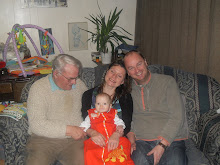
First Brush.
Sitting in the White Horse in Woolton, the other evening, my son, Matthew, related an amusing and yet perhaps, quite serious incident.
Freddie, his four year old and about to start ‘big’ school in September, (he graduated with honours from play school last week) gave out a shriek. He had found a big, fat woodpigeon under a bush. It clearly either had expired or was about to. There were feathers everywhere. I suspect a sparrow hawk was the culprit. Freddie shouted and dashed indoors to grab his plastic toy mobile phone. After bashing a few keys, he began to shout into it: ‘Emergency, emergency. Is God there? I need you! Now! Now! If you aren’t God, get him now, quick! This is an emergency!’
Matthew picked up his phone and called the RSPCA. Within minutes a van arrived and the man investigated. He gently took up the bird and put it into his van. He seemed to instinctively know what was happening.
Freddie said: ‘Look after it and tell God I asked you to.’
The man smiled and said he would and not to worry.
I have just ordered a child’s membership of RSPB for Freddie.
By the way, they have some lovely real ales in the White Horse, especially the Wainrights!
Andrew Bebb
Tuesday, 27 July 2010


Monday, 19 July 2010
Small Mercies Andrew Bebb
As the snow falls round my shoulders,
Eyes closed,
I sit in the Barber’s chair.
‘Round or square?’
Couldn’t really care
I never see it.
It’s other folk’s problem.
My eyebrows carefully shorn,
Even the ears' hairs.
Extra tip in order?
Bit easier now to face my face
As I shave.
Why not be vague
(and ask for Haig's)?
Small mercies.
As the snow falls round my shoulders,
Eyes closed,
I sit in the Barber’s chair.
‘Round or square?’
Couldn’t really care
I never see it.
It’s other folk’s problem.
My eyebrows carefully shorn,
Even the ears' hairs.
Extra tip in order?
Bit easier now to face my face
As I shave.
Why not be vague
(and ask for Haig's)?
Small mercies.
Thursday, 15 July 2010
Post modernism. Is it a threat>
Relativism. Opportunity or Threat ?
The postmodernist perspective is so amorphous as to almost defy description. A good deal of imprecision inevitably flourishes. Its description ranges from the superficial level of popularist culture and its images, to an anarchistic nihilism. Many of its adherents are refugee post-Marxists sheltering under the banner of a relativistic abandonment of all ideological absolutes. Where is one to find the link between the post-structuralism of literary criticism and the postmodernists in field of architecture and art.? There are many who regard the process as a fundamental transformation in human self understanding. They regard it as a radical de-centring of the self and as a comprehensive embracing of relationality and relativism, (which seems to be generating such concern in the breast of Cardinal Ratzinger and his colleagues), as a complete disavowal of the enlightenment project. Others, on the other hand, see it simply as the next sequential stage in the modernising process. The emphasis, for them, is on continuity.
It is a difficult area and I approach it with great diffidence. If you like, this article is simply an offering in a dialogue. After all, it is only in dialogue that we can even approximate to truth, as Levinas might say.
Both the enlightenment and the reaction against it in postmodernity have at their heart an exploration of the significance of the self as it is confronted by a world in which it feels to be an alien. Prior to the change in Western European consciousness inaugurated by both the Reformation and by Descartes, the dominant medieval perspective seems to have been that of a holistic pyramidal model with God at its apex. This hierarchical image was also reflected in the manner in which both Church and State were organised. Although there were those who claimed that this model was organic, paternalistic and with the best interests of the lower orders at heart, it seems to have been largely concerned with the possession of power. Change was regarded as a threat to the status quo and tradition was the power base used to resist it by the establishment. The Church was in possession of the ultimate truths because of its claim to contain, interpret and to communicate Divine Revelation. The most potent threat to the established order of society was heresy.
In philosophical speculation, there were clear restrictions. Metaphysics was acceptable provided that it posed no threat to the ontological structure of a God-oriented and God directed world administered by his legitimised authorities, Church and State. Ethics was founded on the human capacity (guided by the Church authority) to interpret God’s law in the creation for which he was responsible, thus the law of nature. It was there for all to recognise and obey. This description is something of a charicature and an obvious oversimplification. Nevertheless it was at least the underlying aspiration and myth generated by believers in the medieval system, both then and since. The individual had few rights other than those conferred upon him by his divinely legitimated superiors.
The Enlightenment project was directed towards the emancipation of the human individual from this mythical synthesis which had God at its heart. This emancipation was to be achieved through the progressive exercise of the critical reason. Reality was to be reduced to a quantitative model, mathematics was to be the key to power. Newtonian physics gathered all that was considered to have any real significance into its orbit. The qualitative was consigned to the uncontrolled and private arena of subjectivity, no longer available for public truth claims. In that area, taste was to be the sole criterion. The critic and the connoisseur shared centre stage. Art inevitably became artefact. Its function could no longer be an invitation to explore the symbolic significance which it was designed to contain and mediate in the public forum. Private possession of it as an object of value satisfied the acquisitive needs of the art collector or decorative designer. Only music and to some degree poetry seem able to resist. The pressure of rationalisation succeeded eventually in the de-centring of God and replacing Him with the individual, autonomous self.
Religious toleration became for the first time a virtue, since religion could no longer be conceived of as making objective truth claims. It was acceptable until or unless it was deemed to threaten the public good, as defined by liberal orthodoxy. Religious experience replaced religious dogma and creeds or confessions, at least in liberal religious thought.
The Aristotelian/Thomist union between knowledge and love - omne ens est intelligible et omne ens est bonum, with all its optimism for the suppression of non-being which was their estimate of the nature of evil and ugliness, was split apart. Goodness and evil were confined to the interiority of the subjective self where alone there was space for god and demon, and the external physical universe was available to the individual only through the exercise of the power of critical rationality. The inner world and the outer world had lost the possibility of any convincing synthesis.
The subject/object divide engendered by both the reformed theology and the enlightenment philosophy isolated the self within the cocoon of impotent not-belonging. The individual must henceforth establish his right to belong and to participate in the common life through the exercise of power. Autonomy, maturity, independence became the key words at the heart of moral education. To be dependent on others became a sign of weakness. Those who could not compete in the struggle for self-control or power over their surroundings were marginalised. This isolation and centring of the human self initiated a sea-change in which the self and the other, the subject and object, could no longer interrelate or discover each in each. The symbolic value of the object could no longer contain and mediate any transcendental presence with its invitation to explore its limitless meaning and mystery. It became merely a symbol, a sign which perhaps evoked in the now devalued interiority of the beholder the memory of an absence. The inner self now liberated from its conjunction with the outer world of experience became prey to gods and demons. The story lost its roots in reality; faith, as Kant boasted, no longer was dependent on the ambiguity of the historical event. God if not yet dead, was at least confined to the inner realms of personal predilection. History became subverted by historicism. Intentionality as the central presence in the historical process was replaced by a search for the facts. Reality was reduced to the quantitative, to physical law, to the value-added. There was no longer any meta-narrative in which the human individual or community could discover itself. Society had become a myth and no longer had any effective existence beyond the illusion. As George Kitzer points out in his book ‘The McDonaldisation of Society.’ which applies Weber’s Concept of Rationalisation to the 1990’s, the process of McDonaldisation had begun. The iron cage of rationalisation, both inhuman and dehumanising, continues its relentless progress. Systems of quality control and non-human technologies are replacing the inefficient yet messily creative contributions of the human agent.
The modern world was born at the moment when human beings lost their sense of the organic unity of all things. The individual then stood centre stage and looked at the world around as simply different and strange. Subject and object confronted each other. Each was precisely what the other was not. The bridge had gone. No longer was the myth, the story, the imagination able to include both within its mysterious embrace. The human individual was defined at birth and did not belong nor have value, until and unless he or she could acquire the power to control and dominate the environment into which they had been thrown.
Attempts were made in the 19th. Century to regenerate the metanarrative. The universal syntheses of both Hegel and Marx both generated idealistic utopian aspirations. Both submerged the unpredictable particularity and freedom of the individual as subject, into the totality of the whole. The self, under the pressure of the dialectic, was relegated to the status of a disruptive irrational inconvenience. Subjectivity was thus suppressed in the interests of the ideological totality. And so the dichotomy between the object and subject was seemingly overcome. Subjectivity was entirely dissolved into the One, either the Geist of Hegel or the Matter of Marx. But at what cost! The individuality and awkward particularity of the autonomous human being was not liberated from the alienation which the liberal enlightenment had generated, it was simply replaced by another form of personal isolation and impotence. Feelings and values were still to be excluded from human affairs of any significance.
The other significant attempt to reconnect the subject and object was that of Romanticism. It tried to situate the bridge between them in the Image generated within and by personal sensibility. It attempted to restore to, and to impose upon, the world of human experience the transcendent qualitative aura which the enlightenment had consigned to the escapist irrelevance of the subjective.
In the field of religion, it was the notion of Salvation History which began to emerge. The historical process was guided and directed by a transcendent Being who in spite of the vagaries of human freedom and sheer awkwardness, was able to achieve his purposes nevertheless. The presence of God in history could be identified and supported by the historical sciences alone. Thus the 19th. Century quest for the Jesus of history was inaugurated. Thus the History of Religions School searched for common threads in the evolutionary religious history of humankind.
There was also the synthetic evolutionary Teilhardian optimism in which the rational self took control over the whole historical sweep of reality as it was seen to progress inevitably to the millennium of complete exploitation of the natural world.
In retrospect, the evaporation of such optimism took place only progressively. The roots of postmodernity, both in its anarchic and nihilistic form, and also in some constructive attempts to generate new possibilities and space for the human event, can be uncovered in a number of places. Schweitzer towards the end of the 19th. Century effectively put paid to the attempts of the historicists to recover a portrait of Jesus sufficient to generate faith in contemporary believers. Nietzche’s devastating critique of the distortions which had corrupted the Christian gospel and the goodly life. Feuerbach’s consignment of religion to the area of self-projection and the subsequent alienation which those images then generate. Conrad’s exploration of the death of God syndrome in his novel, The Heart of Darkness. More recently we have watched the demise of ideology in Marxism and Socialism. It has to be noted though that attempts are still made to breathe life into the ideology of the market place.
Both Romanticism and Rationalism seem to offer no escape from the corrosive effects of Cartesian dualism. Are there then any grounds for hope in the human project? What if anything lies beyond modernity if a way backwards is sealed off? If the temptation to reconstruct the past through religious or political or social fundamentalism is resisted? If romantic revivals or a re-creation of an organic synthesis or meta-narrative on the medieval model is no longer available? If not even the attempt to revive Victorian morality is conceivable outside the cynicism of politicians?
Some of the Christian theological responses to modernity which have emerged during the past century confront the question as to whether there any hope for the future of the human project.
Karl Barth was the first to repudiate totally the liberal modernism of 19th. Century German theology. God is the ‘Wholly Other’, he proclaimed, not to be discovered in any exploration of the created world in which we live nor in our own subjectivity. He himself is wholly and entirely ‘subject’ and is unavailable save within the relationship which he offers to us. He can never be conceived of as object. Before the divine initiative in which he freely discloses himself, his inaccessibility is complete. Every attempt to approach him must begin from agnosticism. It was, said Barth, unique to the Christian claim that this God who lies beyond all human comprehension had freely offered himself in a personal relationship in which alone he could be encountered and known. God was not a being existing within the perimeters of self identity, he was essentially relational. It was this decentering of man in favour of relationality which points towards the post-modern radical theological rejection of modernity.
This radical disavowal of liberal modernity in the theology of the 20th. Century was the starting point for others. Existentialist perspectives were incorporated into the theological explorations of Bultmann, Tillich and others. Their concern was to affirm that authentic human existence did not lie in the affirmation of unchanging absolutes even in the absolute of the self, but in exploring the unique possibilities which the exercise of authentic freedom in commitment to the other, discloses for human existence. Loving, courageous, unchanging obedience to the other in the confrontation with self-dissolution is the keynote of the life of Jesus.
Martin Buber, the Jewish philosopher, identified the two primary relationships in which he claimed, we respond to the world of external reality. It was in and through the intimacy of the I-thou relationship that we encounter the eternal Thou at the heart of all existence. It is this relationship which is our primary and self-identifying experience.
This movement towards the displacement of the self in favour of relationality as the prerequisite for personal identity, was the foundation of the philosophical anthropology of the Roman Catholic theologian, Karl Rahner. The constitutive existence of being does not consist in its static, simple self-identity prior to relationship. All being is multiple, he claims. Everything which exists achieves its self-realisation through its capacity for self-expressiveness. There is a dynamic at the heart of existence. All being in its movement outwards towards the other, generates its own symbolic self-projection in which it discovers itself and is available for the intimacy of union with its other in the mutuality of self-giving. It enables the possibility of being utterly close to the other and yet to experience through that process of self-dispossession the surprising truth and reality of oneself as it is transcended. This, he claimed, is the paradigm and paradox of the Christian Gospel. To go out of oneself in order to discover oneself. To die so that life might be possible.
To refuse the attraction of the other and to opt to remain within the static self-enclosed isolation of negativity is to refuse to be in its truest sense. It is to generate an imaginary self, an illusion, which has no real existence. This was the problem with Romanticism. It generated images constructed in the self-enclosed arena of the false inauthentic self, rather than in that which is simply there, warts and all. The God who is the product of self projected images is simply that and no more : a self-projected image, an idol. Barth was right. If the Christian Gospel contributes anything to the process of human self-understanding, it can only be when it ceases to be a religion. God is dead. The God of Rahner is a God at the heart of existence who achieves his own self-realisation through this same process of self expressive self emptying. In his own real symbol, the Word which he utters, he eternally encounters and achieves his own self-existence. Dynamic relationality is the ground of all being and in humankind this process becomes uniquely conscious and deliberate. We can choose in freedom to be or not to be. We are our relationships. No more. No less. There are no discrete self-enclosed absolutes. No truth exists independently of the one who speaks it. All truth claims are symbolic and perspectival. It is the singer not the song, the saying not the said. The word made flesh, not the word, the ratio or logos of the Stoics.
This would seem to be the end of the grand meta-narrative which is considered to exist in its own right and almost independently of its participants. Can History survive once it has dispensed with it? Is there still an underlying and overall meaning to be grounded in any dialogue with ideology? Perhaps the way ahead is for both history and theology to disavow the temptation to generate grand projects and to be totally contextualised and problem centred. To spend more time exploring Intentionality and relationships.
In this final section I want turn to the thought of Emmanuel Levinas, the Jewish philosopher who died recently. He claimed that the ethical relationship between the Self and the Other is the primordial relationship rather than that of the dichotomy between subject and object typified in the Cartesian scenario. His project was to prioritise ethics over the pretensions of ontology, and he saw ‘the act of saying, and the exposure it entails, as the mark and the very possibility of ethical sincerity. Whereas ontology must reduce saying to the totalising closure of the said, saying is a state of openness to the other.’ Subjectivity he defined as the dis-interested vulnerability of saying.
In advance of all systems, whether political, religious, or conceptual, and indeed prior to Being itself is the ethical responsibility towards the Other. Alterity consists in the otherness of that which comes to me as my own personal other. It challenges my impulse to transmute it into a stultifying sameness, to reduce it to my cognitive possession, and so to have power over it. This process of destructive transformation of the other into the same typifies the ego in its desire for knowledge and mastery. On the contrary, ‘I become’ said Levinas, ‘a responsible or ethical ‘I’ to the extent that I agree to depose or dethrone myself....to abdicate my position of centrality - in favour of the vulnerable other. As the Bible says: ‘He who loses his soul gains it’. The ethical I is a being who asks if he has a right to be!, who excuses himself to the other for his own existence’ (Levinas 1984, 63)
This de-centring of the self in favour of the absolute other is at the centre of the post-modernist theological stance. It is a rejection of the absolute self-containment of the human self and the arrogant claim for the all-sufficiency of rationality. It opts instead for a profound relationality and relativity. The language of ethics is different from and prior to the language of phenomenology and philosophy. It transcends the Hellenic language of conceptual intelligibility. It transforms the language of dogmatic formulas into the language of explorative relationality
The ethical relationship, he claims, begins in discourse. But even before any word is spoken, the discourse commences in the non-verbal manifestation of the human face and skin. The other is a being of flesh and blood. It is in the corporeal contact with my other that the ethical demand comes to me. So the ethic of Levinas is concrete and corporeal. He is not an idealist nor a romantic. It is the face-to-face encounter which is at the heart of the human reality. The problem is to find a way of maintaining the ‘I’ in the very act of going beyond the ‘I’. To avoid the total dissolution of the self typified in Eastern spirituality. Self transcendence makes no sense in classical phenomenology either, since it it is a self-contradictory notion. To go out of oneself in transcendency would mean that the self has ceased to exist and is no more.
Levinas takes as one of his models the erotic relation. In the sexual union, he says, we have the instance of a relation, a union, which in the mutuality of the coming together remains a duality. He rejects the platonic and romantic idea of sexual union as a becoming one. Levinas describes it as a union with an absolute Other, which remains other as it withdraws into its mystery. Knowledge gives way to the mutuality of voluptuosity.
Luce Irigarey finds it in the relation between mother and foetus during pregnancy. She cites the placenta as the means by which both mother and foetus are both joined and separated. She notes the ‘almost ethical character of the foetal relation’ and uses it as a metaphor for relation of the self to the Other. She describes the cry of the baby at the moment of birth as a moment of exquisite sadness. The cry of triumph ‘I’m here!’ It is the first goodbye of many. She sees its face, and hands it over to others. It is no longer hers.
This prioritising of the ethical relationship over the ontological and phenomenological may be the way forward. Perhaps humanity can rediscover its sense of belonging and its significance. We can claim to belong before we have established our right to belong. We belong simply because we are here - in the powerlessness of our first cry.
‘ The moral priority of the Other over myself,’ says Levinas, ‘ could not come to be if it were not motivated by something beyond nature. The ethical situation is a human situation, beyond human nature, in which the idea of God is the other who turns our nature inside out, who calls our ontological will to be into question....God does indeed go against nature for He is not of this world. God is other than Being.’
The postmodernist perspective is so amorphous as to almost defy description. A good deal of imprecision inevitably flourishes. Its description ranges from the superficial level of popularist culture and its images, to an anarchistic nihilism. Many of its adherents are refugee post-Marxists sheltering under the banner of a relativistic abandonment of all ideological absolutes. Where is one to find the link between the post-structuralism of literary criticism and the postmodernists in field of architecture and art.? There are many who regard the process as a fundamental transformation in human self understanding. They regard it as a radical de-centring of the self and as a comprehensive embracing of relationality and relativism, (which seems to be generating such concern in the breast of Cardinal Ratzinger and his colleagues), as a complete disavowal of the enlightenment project. Others, on the other hand, see it simply as the next sequential stage in the modernising process. The emphasis, for them, is on continuity.
It is a difficult area and I approach it with great diffidence. If you like, this article is simply an offering in a dialogue. After all, it is only in dialogue that we can even approximate to truth, as Levinas might say.
Both the enlightenment and the reaction against it in postmodernity have at their heart an exploration of the significance of the self as it is confronted by a world in which it feels to be an alien. Prior to the change in Western European consciousness inaugurated by both the Reformation and by Descartes, the dominant medieval perspective seems to have been that of a holistic pyramidal model with God at its apex. This hierarchical image was also reflected in the manner in which both Church and State were organised. Although there were those who claimed that this model was organic, paternalistic and with the best interests of the lower orders at heart, it seems to have been largely concerned with the possession of power. Change was regarded as a threat to the status quo and tradition was the power base used to resist it by the establishment. The Church was in possession of the ultimate truths because of its claim to contain, interpret and to communicate Divine Revelation. The most potent threat to the established order of society was heresy.
In philosophical speculation, there were clear restrictions. Metaphysics was acceptable provided that it posed no threat to the ontological structure of a God-oriented and God directed world administered by his legitimised authorities, Church and State. Ethics was founded on the human capacity (guided by the Church authority) to interpret God’s law in the creation for which he was responsible, thus the law of nature. It was there for all to recognise and obey. This description is something of a charicature and an obvious oversimplification. Nevertheless it was at least the underlying aspiration and myth generated by believers in the medieval system, both then and since. The individual had few rights other than those conferred upon him by his divinely legitimated superiors.
The Enlightenment project was directed towards the emancipation of the human individual from this mythical synthesis which had God at its heart. This emancipation was to be achieved through the progressive exercise of the critical reason. Reality was to be reduced to a quantitative model, mathematics was to be the key to power. Newtonian physics gathered all that was considered to have any real significance into its orbit. The qualitative was consigned to the uncontrolled and private arena of subjectivity, no longer available for public truth claims. In that area, taste was to be the sole criterion. The critic and the connoisseur shared centre stage. Art inevitably became artefact. Its function could no longer be an invitation to explore the symbolic significance which it was designed to contain and mediate in the public forum. Private possession of it as an object of value satisfied the acquisitive needs of the art collector or decorative designer. Only music and to some degree poetry seem able to resist. The pressure of rationalisation succeeded eventually in the de-centring of God and replacing Him with the individual, autonomous self.
Religious toleration became for the first time a virtue, since religion could no longer be conceived of as making objective truth claims. It was acceptable until or unless it was deemed to threaten the public good, as defined by liberal orthodoxy. Religious experience replaced religious dogma and creeds or confessions, at least in liberal religious thought.
The Aristotelian/Thomist union between knowledge and love - omne ens est intelligible et omne ens est bonum, with all its optimism for the suppression of non-being which was their estimate of the nature of evil and ugliness, was split apart. Goodness and evil were confined to the interiority of the subjective self where alone there was space for god and demon, and the external physical universe was available to the individual only through the exercise of the power of critical rationality. The inner world and the outer world had lost the possibility of any convincing synthesis.
The subject/object divide engendered by both the reformed theology and the enlightenment philosophy isolated the self within the cocoon of impotent not-belonging. The individual must henceforth establish his right to belong and to participate in the common life through the exercise of power. Autonomy, maturity, independence became the key words at the heart of moral education. To be dependent on others became a sign of weakness. Those who could not compete in the struggle for self-control or power over their surroundings were marginalised. This isolation and centring of the human self initiated a sea-change in which the self and the other, the subject and object, could no longer interrelate or discover each in each. The symbolic value of the object could no longer contain and mediate any transcendental presence with its invitation to explore its limitless meaning and mystery. It became merely a symbol, a sign which perhaps evoked in the now devalued interiority of the beholder the memory of an absence. The inner self now liberated from its conjunction with the outer world of experience became prey to gods and demons. The story lost its roots in reality; faith, as Kant boasted, no longer was dependent on the ambiguity of the historical event. God if not yet dead, was at least confined to the inner realms of personal predilection. History became subverted by historicism. Intentionality as the central presence in the historical process was replaced by a search for the facts. Reality was reduced to the quantitative, to physical law, to the value-added. There was no longer any meta-narrative in which the human individual or community could discover itself. Society had become a myth and no longer had any effective existence beyond the illusion. As George Kitzer points out in his book ‘The McDonaldisation of Society.’ which applies Weber’s Concept of Rationalisation to the 1990’s, the process of McDonaldisation had begun. The iron cage of rationalisation, both inhuman and dehumanising, continues its relentless progress. Systems of quality control and non-human technologies are replacing the inefficient yet messily creative contributions of the human agent.
The modern world was born at the moment when human beings lost their sense of the organic unity of all things. The individual then stood centre stage and looked at the world around as simply different and strange. Subject and object confronted each other. Each was precisely what the other was not. The bridge had gone. No longer was the myth, the story, the imagination able to include both within its mysterious embrace. The human individual was defined at birth and did not belong nor have value, until and unless he or she could acquire the power to control and dominate the environment into which they had been thrown.
Attempts were made in the 19th. Century to regenerate the metanarrative. The universal syntheses of both Hegel and Marx both generated idealistic utopian aspirations. Both submerged the unpredictable particularity and freedom of the individual as subject, into the totality of the whole. The self, under the pressure of the dialectic, was relegated to the status of a disruptive irrational inconvenience. Subjectivity was thus suppressed in the interests of the ideological totality. And so the dichotomy between the object and subject was seemingly overcome. Subjectivity was entirely dissolved into the One, either the Geist of Hegel or the Matter of Marx. But at what cost! The individuality and awkward particularity of the autonomous human being was not liberated from the alienation which the liberal enlightenment had generated, it was simply replaced by another form of personal isolation and impotence. Feelings and values were still to be excluded from human affairs of any significance.
The other significant attempt to reconnect the subject and object was that of Romanticism. It tried to situate the bridge between them in the Image generated within and by personal sensibility. It attempted to restore to, and to impose upon, the world of human experience the transcendent qualitative aura which the enlightenment had consigned to the escapist irrelevance of the subjective.
In the field of religion, it was the notion of Salvation History which began to emerge. The historical process was guided and directed by a transcendent Being who in spite of the vagaries of human freedom and sheer awkwardness, was able to achieve his purposes nevertheless. The presence of God in history could be identified and supported by the historical sciences alone. Thus the 19th. Century quest for the Jesus of history was inaugurated. Thus the History of Religions School searched for common threads in the evolutionary religious history of humankind.
There was also the synthetic evolutionary Teilhardian optimism in which the rational self took control over the whole historical sweep of reality as it was seen to progress inevitably to the millennium of complete exploitation of the natural world.
In retrospect, the evaporation of such optimism took place only progressively. The roots of postmodernity, both in its anarchic and nihilistic form, and also in some constructive attempts to generate new possibilities and space for the human event, can be uncovered in a number of places. Schweitzer towards the end of the 19th. Century effectively put paid to the attempts of the historicists to recover a portrait of Jesus sufficient to generate faith in contemporary believers. Nietzche’s devastating critique of the distortions which had corrupted the Christian gospel and the goodly life. Feuerbach’s consignment of religion to the area of self-projection and the subsequent alienation which those images then generate. Conrad’s exploration of the death of God syndrome in his novel, The Heart of Darkness. More recently we have watched the demise of ideology in Marxism and Socialism. It has to be noted though that attempts are still made to breathe life into the ideology of the market place.
Both Romanticism and Rationalism seem to offer no escape from the corrosive effects of Cartesian dualism. Are there then any grounds for hope in the human project? What if anything lies beyond modernity if a way backwards is sealed off? If the temptation to reconstruct the past through religious or political or social fundamentalism is resisted? If romantic revivals or a re-creation of an organic synthesis or meta-narrative on the medieval model is no longer available? If not even the attempt to revive Victorian morality is conceivable outside the cynicism of politicians?
Some of the Christian theological responses to modernity which have emerged during the past century confront the question as to whether there any hope for the future of the human project.
Karl Barth was the first to repudiate totally the liberal modernism of 19th. Century German theology. God is the ‘Wholly Other’, he proclaimed, not to be discovered in any exploration of the created world in which we live nor in our own subjectivity. He himself is wholly and entirely ‘subject’ and is unavailable save within the relationship which he offers to us. He can never be conceived of as object. Before the divine initiative in which he freely discloses himself, his inaccessibility is complete. Every attempt to approach him must begin from agnosticism. It was, said Barth, unique to the Christian claim that this God who lies beyond all human comprehension had freely offered himself in a personal relationship in which alone he could be encountered and known. God was not a being existing within the perimeters of self identity, he was essentially relational. It was this decentering of man in favour of relationality which points towards the post-modern radical theological rejection of modernity.
This radical disavowal of liberal modernity in the theology of the 20th. Century was the starting point for others. Existentialist perspectives were incorporated into the theological explorations of Bultmann, Tillich and others. Their concern was to affirm that authentic human existence did not lie in the affirmation of unchanging absolutes even in the absolute of the self, but in exploring the unique possibilities which the exercise of authentic freedom in commitment to the other, discloses for human existence. Loving, courageous, unchanging obedience to the other in the confrontation with self-dissolution is the keynote of the life of Jesus.
Martin Buber, the Jewish philosopher, identified the two primary relationships in which he claimed, we respond to the world of external reality. It was in and through the intimacy of the I-thou relationship that we encounter the eternal Thou at the heart of all existence. It is this relationship which is our primary and self-identifying experience.
This movement towards the displacement of the self in favour of relationality as the prerequisite for personal identity, was the foundation of the philosophical anthropology of the Roman Catholic theologian, Karl Rahner. The constitutive existence of being does not consist in its static, simple self-identity prior to relationship. All being is multiple, he claims. Everything which exists achieves its self-realisation through its capacity for self-expressiveness. There is a dynamic at the heart of existence. All being in its movement outwards towards the other, generates its own symbolic self-projection in which it discovers itself and is available for the intimacy of union with its other in the mutuality of self-giving. It enables the possibility of being utterly close to the other and yet to experience through that process of self-dispossession the surprising truth and reality of oneself as it is transcended. This, he claimed, is the paradigm and paradox of the Christian Gospel. To go out of oneself in order to discover oneself. To die so that life might be possible.
To refuse the attraction of the other and to opt to remain within the static self-enclosed isolation of negativity is to refuse to be in its truest sense. It is to generate an imaginary self, an illusion, which has no real existence. This was the problem with Romanticism. It generated images constructed in the self-enclosed arena of the false inauthentic self, rather than in that which is simply there, warts and all. The God who is the product of self projected images is simply that and no more : a self-projected image, an idol. Barth was right. If the Christian Gospel contributes anything to the process of human self-understanding, it can only be when it ceases to be a religion. God is dead. The God of Rahner is a God at the heart of existence who achieves his own self-realisation through this same process of self expressive self emptying. In his own real symbol, the Word which he utters, he eternally encounters and achieves his own self-existence. Dynamic relationality is the ground of all being and in humankind this process becomes uniquely conscious and deliberate. We can choose in freedom to be or not to be. We are our relationships. No more. No less. There are no discrete self-enclosed absolutes. No truth exists independently of the one who speaks it. All truth claims are symbolic and perspectival. It is the singer not the song, the saying not the said. The word made flesh, not the word, the ratio or logos of the Stoics.
This would seem to be the end of the grand meta-narrative which is considered to exist in its own right and almost independently of its participants. Can History survive once it has dispensed with it? Is there still an underlying and overall meaning to be grounded in any dialogue with ideology? Perhaps the way ahead is for both history and theology to disavow the temptation to generate grand projects and to be totally contextualised and problem centred. To spend more time exploring Intentionality and relationships.
In this final section I want turn to the thought of Emmanuel Levinas, the Jewish philosopher who died recently. He claimed that the ethical relationship between the Self and the Other is the primordial relationship rather than that of the dichotomy between subject and object typified in the Cartesian scenario. His project was to prioritise ethics over the pretensions of ontology, and he saw ‘the act of saying, and the exposure it entails, as the mark and the very possibility of ethical sincerity. Whereas ontology must reduce saying to the totalising closure of the said, saying is a state of openness to the other.’ Subjectivity he defined as the dis-interested vulnerability of saying.
In advance of all systems, whether political, religious, or conceptual, and indeed prior to Being itself is the ethical responsibility towards the Other. Alterity consists in the otherness of that which comes to me as my own personal other. It challenges my impulse to transmute it into a stultifying sameness, to reduce it to my cognitive possession, and so to have power over it. This process of destructive transformation of the other into the same typifies the ego in its desire for knowledge and mastery. On the contrary, ‘I become’ said Levinas, ‘a responsible or ethical ‘I’ to the extent that I agree to depose or dethrone myself....to abdicate my position of centrality - in favour of the vulnerable other. As the Bible says: ‘He who loses his soul gains it’. The ethical I is a being who asks if he has a right to be!, who excuses himself to the other for his own existence’ (Levinas 1984, 63)
This de-centring of the self in favour of the absolute other is at the centre of the post-modernist theological stance. It is a rejection of the absolute self-containment of the human self and the arrogant claim for the all-sufficiency of rationality. It opts instead for a profound relationality and relativity. The language of ethics is different from and prior to the language of phenomenology and philosophy. It transcends the Hellenic language of conceptual intelligibility. It transforms the language of dogmatic formulas into the language of explorative relationality
The ethical relationship, he claims, begins in discourse. But even before any word is spoken, the discourse commences in the non-verbal manifestation of the human face and skin. The other is a being of flesh and blood. It is in the corporeal contact with my other that the ethical demand comes to me. So the ethic of Levinas is concrete and corporeal. He is not an idealist nor a romantic. It is the face-to-face encounter which is at the heart of the human reality. The problem is to find a way of maintaining the ‘I’ in the very act of going beyond the ‘I’. To avoid the total dissolution of the self typified in Eastern spirituality. Self transcendence makes no sense in classical phenomenology either, since it it is a self-contradictory notion. To go out of oneself in transcendency would mean that the self has ceased to exist and is no more.
Levinas takes as one of his models the erotic relation. In the sexual union, he says, we have the instance of a relation, a union, which in the mutuality of the coming together remains a duality. He rejects the platonic and romantic idea of sexual union as a becoming one. Levinas describes it as a union with an absolute Other, which remains other as it withdraws into its mystery. Knowledge gives way to the mutuality of voluptuosity.
Luce Irigarey finds it in the relation between mother and foetus during pregnancy. She cites the placenta as the means by which both mother and foetus are both joined and separated. She notes the ‘almost ethical character of the foetal relation’ and uses it as a metaphor for relation of the self to the Other. She describes the cry of the baby at the moment of birth as a moment of exquisite sadness. The cry of triumph ‘I’m here!’ It is the first goodbye of many. She sees its face, and hands it over to others. It is no longer hers.
This prioritising of the ethical relationship over the ontological and phenomenological may be the way forward. Perhaps humanity can rediscover its sense of belonging and its significance. We can claim to belong before we have established our right to belong. We belong simply because we are here - in the powerlessness of our first cry.
‘ The moral priority of the Other over myself,’ says Levinas, ‘ could not come to be if it were not motivated by something beyond nature. The ethical situation is a human situation, beyond human nature, in which the idea of God is the other who turns our nature inside out, who calls our ontological will to be into question....God does indeed go against nature for He is not of this world. God is other than Being.’
Monday, 5 July 2010
I buried the cat in the garden
I buried the cat in the garden
This was the phrase that Fr. Tigar had us recite when we were having elocution lessons at Osterley. Osterley is in West London and it was a place where late vocations to the priesthood could be vetted and introduced to the mysteries of Latin (essential in the fifties), reasonable English and even Greek. It was part of our initial training in preparation for subsequent ministry. We had to recite the phrase again and again, each time emphasizing a different word in the sentence. This was a clever exercise and designed to show how a change of emphasis could change the meaning of a statement. Try it and see! To an outsider who didn’t understand what we were up to, it was a crazy exercise because we were made to stand in various parts of the large garden to ensure that our voice could carry good distances. Unfortunately part of the garden ran alongside the rear of a row of suburban houses. On at least one occasion the patience of one of the neighbours in an adjoining garden, reached its limit and he shouted some extremely rude words at us! He probably thought that we were all detained under the Mental Health Act.
Anyway that is not the subject that I want to talk about. Burying animals in the garden is my chosen topic!
Since I have always had a fairly large family, sometimes larger than others, for one reason or another the demise and disposal of pets has always presented problems and of course opportunities; but more about that later. In my time, the duties of parenting have included the burial of three cats, four hamsters, one rabbit and a fish. Each interment involved simple and respectful rituals, designed by myself – I got quite good at it. They all died with dignity I am proud to say! Even when the Vet offered to dispose of the remains the answer was always a horrified No! A suitable period of mourning was always allowed. It also provided an opportunity to increase the number of flowering shrubs in the garden since each grave must be suitably marked. I ought to point out here that we have had the pleasure of at least three gardens over the years so our present fairly small garden does not qualify as a crowded cemetery!
I think I would like to tell you about the most recent committals and what led up to them. Some thirteen or so years ago my wife and I were married. We had both been married previously and both of us had been widowed. But that is a story of its own. Suffice to say, it meant that our still youngish joint family suddenly increased to nine, five girls and four boys. A thoughtful friend, in order to provide some comfort to four of my wife’s daughters on the loss of their father, gave them a pair of kittens.
These were a couple of extremely interesting cats. One, black and white, was christened Charley, and the other, white and black, was called Ceri. The distinguishing thing about them was that they were twin sisters. Ceri boasted a very unusual crooked tail. This I was assured was not due to overcrowding in their mother’s womb, but personally I have never been so certain of that. As you will see, they presented an interesting contribution to the nature/nurture debate. In the early days, they both had the loathsome habit of trying to mark out their own personal territory and this indoors! It was usually the television set that drew most of their competitive attentions. They must have assumed that since it was a centre of concentrated attention by all, it was an important object of some kind of worship. Anyway they were clearly of the opinion that whichever one of them could spray on it first enabled some kind of dominance over the sister! If left unshielded overnight this led to serious consequences for the electronics of the TV set and/or the video machine. Not to mention the typically pungent smell of cat piss.
Anyway to proceed with Charley’s and Ceri’s contribution to the nature/nurture debate. Charley, the black and white cat, had ostensibly a very affectionate disposition. She seemed to thrive on physical contact. She did not like leaving the house and had to be persuaded (occasionally physically!), to perform the whatsits in the morning. She had a highly sensitive disposition, being scared stiff of anything and everything. I remember an occasion when I discovered them both at the back of the house. They were both concentrating their attention at each end of a long wooden plank leaning lengthwise against the wall, Charley at one end Ceri at the other. I realised that a poor little mouse was trapped in between. Eventually the mouse must have recognised that its future was uncertain and made a dash for freedom; fortunately for the mouse, at Charley’s end. When the mouse shot out, Charley leapt a good two feet in the air with shock and the mouse made its escape. Ceri registered appropriate contempt.
The two cats seem to have had little affection for each other and would often engage in quite vicious battles if they passed each other in a confined space. Although when they were very young they had sometimes been seen to snuggle up to, and even wash each other.
For most of their life together the two cats could hardly have been more different. Ceri was the complete extrovert. She spent as little time in the house as possible and occasionally could be found wandering some distance away. On those occasions she would studiously avoid recognition of any relationship with us! She was an adept at climbing any accessible roofs in the neighbourhood. She had no hesitation in engaging in vicious combat with any local cat entering her duly marked territory. Much to our displeasure, she would very occasionally attempt to catch small birds. Once or twice she succeeded. Indoors, she avoided physical contact with the human incumbents and didn’t particularly enjoy being stroked.
However all this was to change!
Charley at an advanced age (for cats anyway), began show its inevitable debilitating effects. She began to look for dark corners in which to nestle. It was plain that the end was near. The vet said her kidneys had failed. The kindest thing was to let her go with an injection. Even those in the house who were not too keen on cats, felt a little sad. The body was carried home in a suitable box, a last photograph was taken and a sensitive rite prepared for the interment in a corner of the garden. A flowering bush was planted on the grave (which presently draws comment on its fecundity!).
Ceri was on her own.
And so begins the most interesting period for the student of feline behaviour. Ceri was no longer interested in wandering outdoors. She was reluctant to leave the house. In the days after her sister’s death it was as if she was entering a state of deep grieving. She seemed to be looking everywhere for what was no longer there. She became unhappy and unsettled whenever she was left on her own and would yowl loudly if there were no one about. She survived her sister by another two years or so. Throughout that time it was as though she was experiencing a complete and fundamental change of personality. Always she needed to be touched and to nestle on anyone’s lap, even mine! She had tended to avoid me sedulously before this! Finally she began to submit to the encroachment of old age. She probably outlived Charley because of her previous healthy active life outdoors.. She grew increasingly thin. Her diet was limited to a most expensive menu! She had difficulty even in climbing up onto the settee. There were times when we thought she had gone to join her sister already. Eventually we all agreed it was time to help her on her way. However she died naturally, without any assistance, on the vet’s table.
Another grave to be dug. Another ritual to be composed. Here is the combined adieu we made to them both:
We are grateful for the life of Charley, our cat. She loved to lie on laps and to be touched.
We are also grateful for the life of Ceri, her sister. In her earlier days she loved the outdoors and was quite independent. As she grew older she needed company and touch. They brought to our family joy, companionship and comfort in our grieving.
One day may we all meet each other again in a life of never ending happiness and peace.
This was the phrase that Fr. Tigar had us recite when we were having elocution lessons at Osterley. Osterley is in West London and it was a place where late vocations to the priesthood could be vetted and introduced to the mysteries of Latin (essential in the fifties), reasonable English and even Greek. It was part of our initial training in preparation for subsequent ministry. We had to recite the phrase again and again, each time emphasizing a different word in the sentence. This was a clever exercise and designed to show how a change of emphasis could change the meaning of a statement. Try it and see! To an outsider who didn’t understand what we were up to, it was a crazy exercise because we were made to stand in various parts of the large garden to ensure that our voice could carry good distances. Unfortunately part of the garden ran alongside the rear of a row of suburban houses. On at least one occasion the patience of one of the neighbours in an adjoining garden, reached its limit and he shouted some extremely rude words at us! He probably thought that we were all detained under the Mental Health Act.
Anyway that is not the subject that I want to talk about. Burying animals in the garden is my chosen topic!
Since I have always had a fairly large family, sometimes larger than others, for one reason or another the demise and disposal of pets has always presented problems and of course opportunities; but more about that later. In my time, the duties of parenting have included the burial of three cats, four hamsters, one rabbit and a fish. Each interment involved simple and respectful rituals, designed by myself – I got quite good at it. They all died with dignity I am proud to say! Even when the Vet offered to dispose of the remains the answer was always a horrified No! A suitable period of mourning was always allowed. It also provided an opportunity to increase the number of flowering shrubs in the garden since each grave must be suitably marked. I ought to point out here that we have had the pleasure of at least three gardens over the years so our present fairly small garden does not qualify as a crowded cemetery!
I think I would like to tell you about the most recent committals and what led up to them. Some thirteen or so years ago my wife and I were married. We had both been married previously and both of us had been widowed. But that is a story of its own. Suffice to say, it meant that our still youngish joint family suddenly increased to nine, five girls and four boys. A thoughtful friend, in order to provide some comfort to four of my wife’s daughters on the loss of their father, gave them a pair of kittens.
These were a couple of extremely interesting cats. One, black and white, was christened Charley, and the other, white and black, was called Ceri. The distinguishing thing about them was that they were twin sisters. Ceri boasted a very unusual crooked tail. This I was assured was not due to overcrowding in their mother’s womb, but personally I have never been so certain of that. As you will see, they presented an interesting contribution to the nature/nurture debate. In the early days, they both had the loathsome habit of trying to mark out their own personal territory and this indoors! It was usually the television set that drew most of their competitive attentions. They must have assumed that since it was a centre of concentrated attention by all, it was an important object of some kind of worship. Anyway they were clearly of the opinion that whichever one of them could spray on it first enabled some kind of dominance over the sister! If left unshielded overnight this led to serious consequences for the electronics of the TV set and/or the video machine. Not to mention the typically pungent smell of cat piss.
Anyway to proceed with Charley’s and Ceri’s contribution to the nature/nurture debate. Charley, the black and white cat, had ostensibly a very affectionate disposition. She seemed to thrive on physical contact. She did not like leaving the house and had to be persuaded (occasionally physically!), to perform the whatsits in the morning. She had a highly sensitive disposition, being scared stiff of anything and everything. I remember an occasion when I discovered them both at the back of the house. They were both concentrating their attention at each end of a long wooden plank leaning lengthwise against the wall, Charley at one end Ceri at the other. I realised that a poor little mouse was trapped in between. Eventually the mouse must have recognised that its future was uncertain and made a dash for freedom; fortunately for the mouse, at Charley’s end. When the mouse shot out, Charley leapt a good two feet in the air with shock and the mouse made its escape. Ceri registered appropriate contempt.
The two cats seem to have had little affection for each other and would often engage in quite vicious battles if they passed each other in a confined space. Although when they were very young they had sometimes been seen to snuggle up to, and even wash each other.
For most of their life together the two cats could hardly have been more different. Ceri was the complete extrovert. She spent as little time in the house as possible and occasionally could be found wandering some distance away. On those occasions she would studiously avoid recognition of any relationship with us! She was an adept at climbing any accessible roofs in the neighbourhood. She had no hesitation in engaging in vicious combat with any local cat entering her duly marked territory. Much to our displeasure, she would very occasionally attempt to catch small birds. Once or twice she succeeded. Indoors, she avoided physical contact with the human incumbents and didn’t particularly enjoy being stroked.
However all this was to change!
Charley at an advanced age (for cats anyway), began show its inevitable debilitating effects. She began to look for dark corners in which to nestle. It was plain that the end was near. The vet said her kidneys had failed. The kindest thing was to let her go with an injection. Even those in the house who were not too keen on cats, felt a little sad. The body was carried home in a suitable box, a last photograph was taken and a sensitive rite prepared for the interment in a corner of the garden. A flowering bush was planted on the grave (which presently draws comment on its fecundity!).
Ceri was on her own.
And so begins the most interesting period for the student of feline behaviour. Ceri was no longer interested in wandering outdoors. She was reluctant to leave the house. In the days after her sister’s death it was as if she was entering a state of deep grieving. She seemed to be looking everywhere for what was no longer there. She became unhappy and unsettled whenever she was left on her own and would yowl loudly if there were no one about. She survived her sister by another two years or so. Throughout that time it was as though she was experiencing a complete and fundamental change of personality. Always she needed to be touched and to nestle on anyone’s lap, even mine! She had tended to avoid me sedulously before this! Finally she began to submit to the encroachment of old age. She probably outlived Charley because of her previous healthy active life outdoors.. She grew increasingly thin. Her diet was limited to a most expensive menu! She had difficulty even in climbing up onto the settee. There were times when we thought she had gone to join her sister already. Eventually we all agreed it was time to help her on her way. However she died naturally, without any assistance, on the vet’s table.
Another grave to be dug. Another ritual to be composed. Here is the combined adieu we made to them both:
We are grateful for the life of Charley, our cat. She loved to lie on laps and to be touched.
We are also grateful for the life of Ceri, her sister. In her earlier days she loved the outdoors and was quite independent. As she grew older she needed company and touch. They brought to our family joy, companionship and comfort in our grieving.
One day may we all meet each other again in a life of never ending happiness and peace.
Friday, 25 June 2010
unusual encounters
Unusual Encounters Andrew Bebb
Reading an editorial somewhere on ‘Respect difference, teach unity’ has set me thinking. Perhaps the way forward is not so much elaborately constructed formal self-conscious meetings. Maybe a more informal and unexpected encounter is more effective. It is often readily available. We do not often have to look too far to come across it.
I had been attending a Theology Conference at Ushaw College a few miles outside Durham. It was an enriching experience and also quite a nostalgic one for me, since I spent 6 years in the fifties studying there. The train journeys have on two occasions surprisingly involved unusually memorable religious encounters.
If you are familiar with travel to the North East, you will know the anxieties engendered by having to change trains at York. You sit in the train regularly checking your watch hoping that you will be on time. York Station is quite huge, with platforms almost a mile long. Usually your train arrives at one end of an enormous platform. Your connection is then due to leave at the other end. This means a gallop of two hundred yards, down to the other end with only minutes available.
On one occasion, I was starting the usual gallop pulling my bag, when suddenly beside my side a young Buddhist monk appeared clad from head to foot in saffron robes. He shouted “Come on, I’ll help” and he ran beside me pulling my case. I got the connection. Ever since I have harboured a warm affection for Buddhism.
The other occasion happened quite recently.
This time, the train from Durham was on time and I was able to board the Liverpool train in comfort. Indeed there was a surfeit of unreserved seats. I chose a window seat and waited for the carriage to fill. To my surprise and indeed delight one of the last to board was a Rabbi. He entered a little uncertainly. I suppose it was because his personal appearance was a little unfamiliar to our eyes. He clearly belonged to the Orthodox tradition in Judaism He wore a long black thick overcoat and on his head above his zucchetto, a beautiful black round homburg-type hat. The most striking part of his appearance was his long straggly beard and hair. As he approached, I patted the aisle seat beside me and invited him to take a seat. Which he did, I hope a little gratefully. What followed was for us both a most delightful experience. I have never known the journey from Durham to Manchester pass so quickly.
We began by telling each other where we were coming from and why. He told me that he had been visiting Newcastle and was on his way back to join his community at Crumpsall in North Manchester. I explained that I had been attending a Theology Conference at Ushaw. He asked me what the subject of the Conference was. I told him it was on St. Paul, which interested him. He, he told me, had been visiting the Rabbinate in Newcastle to speak to the students. He had written a book to help with their studies and was leading them through it. He asked me since I was a theologian whether I was a priest. I told him that I was but that I had been allowed to resign the active ministry in order to raise a family. He knew that Catholic priests were not normally permitted to marry and to continue in the ministry. He told me that he had 15 children so I told him that I had 9. Quite a lot between us!! We didn’t go into the issue of grandchildren in case the discussion became competitive!
He told me that his ancestors had come to England from the Ukraine at the beginning of the 20th. Century fleeing from persecution. He was grateful for the toleration which English people had shown to his community over the years.
From that point on, our conversation focussed on the scenery outside the window of the train. He was full of questions. He wished to know the names of all the Yorkshire Rivers. Fortunately I had learned them as a rhyme as a little boy at school. He was also very interested in the canal system in the North of England., especially the Leeds and Liverpool Canal. I told him off once for asking a question of which I had already given him the answer, He laughed and scolded himself. His other area of interest was the purpose of the large disused buildings in the valleys. I explained that they had been woollen mills and in Lancashire, cotton mills. He wanted to know something of the history of the woollen and cotton trades. It made me realise that much of his experience of the wider history of the North of England had been from within his own local community. He became a delightful student and the miles outside the window passed away so quickly. Soon we were approaching his destination and the time to part. He disappeared for a while and returned with a bottle of Coke and two plastic glasses. He intended to cement our newly found friendship with a toast. Which we did. As we touched our glasses, he said “cheers” and I replied “shalom”.
I was very sorry to see him go. As he left he shouted back from the open door:” Goodbye, Andrew”. I shouted back: “Goodbye, Abrahim”
A number of our fellow passengers looked a little puzzled.
Reading an editorial somewhere on ‘Respect difference, teach unity’ has set me thinking. Perhaps the way forward is not so much elaborately constructed formal self-conscious meetings. Maybe a more informal and unexpected encounter is more effective. It is often readily available. We do not often have to look too far to come across it.
I had been attending a Theology Conference at Ushaw College a few miles outside Durham. It was an enriching experience and also quite a nostalgic one for me, since I spent 6 years in the fifties studying there. The train journeys have on two occasions surprisingly involved unusually memorable religious encounters.
If you are familiar with travel to the North East, you will know the anxieties engendered by having to change trains at York. You sit in the train regularly checking your watch hoping that you will be on time. York Station is quite huge, with platforms almost a mile long. Usually your train arrives at one end of an enormous platform. Your connection is then due to leave at the other end. This means a gallop of two hundred yards, down to the other end with only minutes available.
On one occasion, I was starting the usual gallop pulling my bag, when suddenly beside my side a young Buddhist monk appeared clad from head to foot in saffron robes. He shouted “Come on, I’ll help” and he ran beside me pulling my case. I got the connection. Ever since I have harboured a warm affection for Buddhism.
The other occasion happened quite recently.
This time, the train from Durham was on time and I was able to board the Liverpool train in comfort. Indeed there was a surfeit of unreserved seats. I chose a window seat and waited for the carriage to fill. To my surprise and indeed delight one of the last to board was a Rabbi. He entered a little uncertainly. I suppose it was because his personal appearance was a little unfamiliar to our eyes. He clearly belonged to the Orthodox tradition in Judaism He wore a long black thick overcoat and on his head above his zucchetto, a beautiful black round homburg-type hat. The most striking part of his appearance was his long straggly beard and hair. As he approached, I patted the aisle seat beside me and invited him to take a seat. Which he did, I hope a little gratefully. What followed was for us both a most delightful experience. I have never known the journey from Durham to Manchester pass so quickly.
We began by telling each other where we were coming from and why. He told me that he had been visiting Newcastle and was on his way back to join his community at Crumpsall in North Manchester. I explained that I had been attending a Theology Conference at Ushaw. He asked me what the subject of the Conference was. I told him it was on St. Paul, which interested him. He, he told me, had been visiting the Rabbinate in Newcastle to speak to the students. He had written a book to help with their studies and was leading them through it. He asked me since I was a theologian whether I was a priest. I told him that I was but that I had been allowed to resign the active ministry in order to raise a family. He knew that Catholic priests were not normally permitted to marry and to continue in the ministry. He told me that he had 15 children so I told him that I had 9. Quite a lot between us!! We didn’t go into the issue of grandchildren in case the discussion became competitive!
He told me that his ancestors had come to England from the Ukraine at the beginning of the 20th. Century fleeing from persecution. He was grateful for the toleration which English people had shown to his community over the years.
From that point on, our conversation focussed on the scenery outside the window of the train. He was full of questions. He wished to know the names of all the Yorkshire Rivers. Fortunately I had learned them as a rhyme as a little boy at school. He was also very interested in the canal system in the North of England., especially the Leeds and Liverpool Canal. I told him off once for asking a question of which I had already given him the answer, He laughed and scolded himself. His other area of interest was the purpose of the large disused buildings in the valleys. I explained that they had been woollen mills and in Lancashire, cotton mills. He wanted to know something of the history of the woollen and cotton trades. It made me realise that much of his experience of the wider history of the North of England had been from within his own local community. He became a delightful student and the miles outside the window passed away so quickly. Soon we were approaching his destination and the time to part. He disappeared for a while and returned with a bottle of Coke and two plastic glasses. He intended to cement our newly found friendship with a toast. Which we did. As we touched our glasses, he said “cheers” and I replied “shalom”.
I was very sorry to see him go. As he left he shouted back from the open door:” Goodbye, Andrew”. I shouted back: “Goodbye, Abrahim”
A number of our fellow passengers looked a little puzzled.
continuity and change
Continuity and Change
Andrew Bebb
I had been asked some time ago to offer some personal reflections so I must apologize in
advance for the seemingly egocentric nature of this contribution. It is simply offered as a
possible source of comfort to those who may be undergoing or have undergone the bereavement of loss as they moved out of the active ministry.
The Year of Prayer for Priests is also a year of prayer for those men who have left priestly ministry, according to Benedict XVI's secretary of state. Cardinal Tarcisio Bertone [VATICAN CITY, AUG. 31, 2009 (Zenit.org)]. The year is also a "renewal of contact, fraternal help, and if it is possible, a reuniting with those priests who for various reasons have left behind their priestly ministry," "Moreover, the sometimes weak fabric of dialogue between bishops and priests is being strengthened, and special attention is being given to those priests who have been put to the side in pastoral ministry." The Holy Father wants to show "special attention to priests and to priestly vocations" and to promote "a movement within the whole people of God, of a growing affection and closeness to ordained ministers.” Cardinal Bertone finally affirmed, "The holy priests who have been part of the history of the Church will not cease to protect and support this road to renewal that Benedict XVI has proposed."
Many years ago, I myself resigned from the active diocesan ministry in which I had
worked for 10 years. Although the transition from cleric to layman carried its own traumas, the most profound and the most surprising experience was, and indeed has proved continuously to be, that of a deep underlying continuity in my life. It also helps me to understand the concern of the Holy Father for the many thousands who over the years have felt that God was calling them in a new direction within the Church. A continuity, which I would like to try and explain.
I remember some time before my resignation from active ministry sharing my reflections with my brothers and friends in the priesthood during a day of recollection. I had been invited to lead the day. I chose for my theme that of the celibate life and its significance. I attempted to describe it as a gift designed to 'liberate for freedom’. A state of detachment for service in love. A state in which the priest is able to reflect back to the people of God that Word which is already present within them individually and as a community, indeed one which precedes his own coming amongst them..
Christ is present, I recalled, in his Body, the Christian community; as really
present as he is during the proclamation of the Word and the celebration of the Eucharist.
The priest accepts that presence from them and refocuses it only to return it. The demand is simply to become transparent to that presence, both in the proclamation of the Word and in its Eucharistic celebration. His whole purpose is to live out the grace, which has chosen him to be the medium and servant through which the Spirit of Jesus is brought into the lives of men and women.
His task is to empty himself and not get in the way. The possibility of the priest
becoming such, lay simply in the extent of his capacity for self-effacement in the power of the Spirit.
On leaving the ministerial priesthood, I was soon to discover it was not simply a gift, which was the fruit of the professional celibate clerical status, but was a continuing presence arising from the Sacrament of Order. If the institutional Church in its wisdom, chose to limit the exercise of that commitment, so be it. My subsequent responsibilities as a husband and a father and as a human being could only be to do my best to continue to exercise priesthood within the constraints and opportunities of the new life, which God had called me to. Celibacy was certainly not the indispensable condition of an existential priesthood as I came to experience it, although it clearly may be for others. The recent ordination of former Anglican clergy to the Catholic priesthood manifests this; as also does the long tradition of a married clergy in the Orthodox Churches of the East.
Married life carries with it continuous opportunities for self-sacrificing love. If we, as
incarnational Christians, are to love, serve and enjoy God in our neighbour, where else can we who are married, find him more completely than in our closest neighbour, our spouse?
What, I think, is helpful, is to convince oneself that to experience change, even a quite
profound change, is normal in human life. It is not simply something to be undergone, but is often desirable, is quite healthy, is indeed rooted in the Biblical experience. The God of
Biblical revelation is a God who calls us into newness. What is important, however, is that the change should not be dependent upon total discontinuity, a rejection of everything that has gone before. We need to build links between the 'there and then' and the 'here and now'.
Those links lie within us to discover. For some, it may lie in the exercise of leadership
through worship, spiritual direction or shared prayer; for others, it is
expressed in teaching, social service, and the caring professions. Every priest, celibate or
married, must exercise a ministry within the constraints and possibilities of
a particular life situation.
After over forty years of living out a married priesthood after resigning from the parochial ministry in which I had spent ten contented years, it may be a
help to share some of my own experiences. Like most people, I have known moments of
enormous joy and also times of deep pain and sadness. After twenty years of a contented
marriage which bore the fruit of four delightful children, my wife died of cancer after a
protracted illness. Now, I am once again happily married to Angela who herself was suddenly widowed and left with five lovely children. So there you are, this former celibate has been able to rejoice in two lovely wives and nine beautiful children! Although I do not think they would thank me for describing them as children! The youngest is now thirty and the eldest thirty-nine. I do hope it is a good sign that three of them read theology at University. The others, without exception are involved, in one form or another, of service to others: teaching, social services, nursing, and one a Policeman. Up to this date we have 14 grandchildren to rejoice in, and two more on the way..
Now, back to my theme. In what ways has the Sacrament of Order continued
to flourish in my own life? Sometimes it has done so in practical ways. I remember the few occasions when I was able to offer sacramental support and comfort to the seriously injured in accidents, etc. I remember the many times I was able to bring my first wife viaticum and the sacrament of the sick. I remember the blessing I was able to give to young children and to the new born. I recall the many occasions when in giving counseling, support and advice to my students in the University, I have felt the power of priesthood very close. I have been fortunate in being able to teach theology in Higher Education during all those years and it is difficult to describe the satisfaction, which that has brought. My experiences in politics standing as a candidate for election, provided many opportunities for offering Christian and priestly witness.
In some ways perhaps our state as married priests is a little like the hidden years
of Jesus' priestly life. What I want to say more than anything to those whose wounds may be still raw from experiences of rejection and shame, who perhaps also feel an emptiness in their lives deep down, is this: rejoice in your continuing priesthood and the eternal commission which Jesus gave to you through His Body, the Church. That commission is still laid upon you and its exercise will be surprisingly possible in all kinds of unexpected situations. I remember an occasion when the partner of a friend who was on the point of leaving the ministerial priesthood, said that she was dreading the day when he would say his last Mass, because it meant so much to him. My response was to say that such a day need never come. Whenever he is actively present during the celebration of the Eucharist, no matter how far down the Church he happens to be kneeling, he will be a concelebrant and offering that Eucharist as a priest. Nobody can ever take that away from him.
Andrew Bebb
I had been asked some time ago to offer some personal reflections so I must apologize in
advance for the seemingly egocentric nature of this contribution. It is simply offered as a
possible source of comfort to those who may be undergoing or have undergone the bereavement of loss as they moved out of the active ministry.
The Year of Prayer for Priests is also a year of prayer for those men who have left priestly ministry, according to Benedict XVI's secretary of state. Cardinal Tarcisio Bertone [VATICAN CITY, AUG. 31, 2009 (Zenit.org)]. The year is also a "renewal of contact, fraternal help, and if it is possible, a reuniting with those priests who for various reasons have left behind their priestly ministry," "Moreover, the sometimes weak fabric of dialogue between bishops and priests is being strengthened, and special attention is being given to those priests who have been put to the side in pastoral ministry." The Holy Father wants to show "special attention to priests and to priestly vocations" and to promote "a movement within the whole people of God, of a growing affection and closeness to ordained ministers.” Cardinal Bertone finally affirmed, "The holy priests who have been part of the history of the Church will not cease to protect and support this road to renewal that Benedict XVI has proposed."
Many years ago, I myself resigned from the active diocesan ministry in which I had
worked for 10 years. Although the transition from cleric to layman carried its own traumas, the most profound and the most surprising experience was, and indeed has proved continuously to be, that of a deep underlying continuity in my life. It also helps me to understand the concern of the Holy Father for the many thousands who over the years have felt that God was calling them in a new direction within the Church. A continuity, which I would like to try and explain.
I remember some time before my resignation from active ministry sharing my reflections with my brothers and friends in the priesthood during a day of recollection. I had been invited to lead the day. I chose for my theme that of the celibate life and its significance. I attempted to describe it as a gift designed to 'liberate for freedom’. A state of detachment for service in love. A state in which the priest is able to reflect back to the people of God that Word which is already present within them individually and as a community, indeed one which precedes his own coming amongst them..
Christ is present, I recalled, in his Body, the Christian community; as really
present as he is during the proclamation of the Word and the celebration of the Eucharist.
The priest accepts that presence from them and refocuses it only to return it. The demand is simply to become transparent to that presence, both in the proclamation of the Word and in its Eucharistic celebration. His whole purpose is to live out the grace, which has chosen him to be the medium and servant through which the Spirit of Jesus is brought into the lives of men and women.
His task is to empty himself and not get in the way. The possibility of the priest
becoming such, lay simply in the extent of his capacity for self-effacement in the power of the Spirit.
On leaving the ministerial priesthood, I was soon to discover it was not simply a gift, which was the fruit of the professional celibate clerical status, but was a continuing presence arising from the Sacrament of Order. If the institutional Church in its wisdom, chose to limit the exercise of that commitment, so be it. My subsequent responsibilities as a husband and a father and as a human being could only be to do my best to continue to exercise priesthood within the constraints and opportunities of the new life, which God had called me to. Celibacy was certainly not the indispensable condition of an existential priesthood as I came to experience it, although it clearly may be for others. The recent ordination of former Anglican clergy to the Catholic priesthood manifests this; as also does the long tradition of a married clergy in the Orthodox Churches of the East.
Married life carries with it continuous opportunities for self-sacrificing love. If we, as
incarnational Christians, are to love, serve and enjoy God in our neighbour, where else can we who are married, find him more completely than in our closest neighbour, our spouse?
What, I think, is helpful, is to convince oneself that to experience change, even a quite
profound change, is normal in human life. It is not simply something to be undergone, but is often desirable, is quite healthy, is indeed rooted in the Biblical experience. The God of
Biblical revelation is a God who calls us into newness. What is important, however, is that the change should not be dependent upon total discontinuity, a rejection of everything that has gone before. We need to build links between the 'there and then' and the 'here and now'.
Those links lie within us to discover. For some, it may lie in the exercise of leadership
through worship, spiritual direction or shared prayer; for others, it is
expressed in teaching, social service, and the caring professions. Every priest, celibate or
married, must exercise a ministry within the constraints and possibilities of
a particular life situation.
After over forty years of living out a married priesthood after resigning from the parochial ministry in which I had spent ten contented years, it may be a
help to share some of my own experiences. Like most people, I have known moments of
enormous joy and also times of deep pain and sadness. After twenty years of a contented
marriage which bore the fruit of four delightful children, my wife died of cancer after a
protracted illness. Now, I am once again happily married to Angela who herself was suddenly widowed and left with five lovely children. So there you are, this former celibate has been able to rejoice in two lovely wives and nine beautiful children! Although I do not think they would thank me for describing them as children! The youngest is now thirty and the eldest thirty-nine. I do hope it is a good sign that three of them read theology at University. The others, without exception are involved, in one form or another, of service to others: teaching, social services, nursing, and one a Policeman. Up to this date we have 14 grandchildren to rejoice in, and two more on the way..
Now, back to my theme. In what ways has the Sacrament of Order continued
to flourish in my own life? Sometimes it has done so in practical ways. I remember the few occasions when I was able to offer sacramental support and comfort to the seriously injured in accidents, etc. I remember the many times I was able to bring my first wife viaticum and the sacrament of the sick. I remember the blessing I was able to give to young children and to the new born. I recall the many occasions when in giving counseling, support and advice to my students in the University, I have felt the power of priesthood very close. I have been fortunate in being able to teach theology in Higher Education during all those years and it is difficult to describe the satisfaction, which that has brought. My experiences in politics standing as a candidate for election, provided many opportunities for offering Christian and priestly witness.
In some ways perhaps our state as married priests is a little like the hidden years
of Jesus' priestly life. What I want to say more than anything to those whose wounds may be still raw from experiences of rejection and shame, who perhaps also feel an emptiness in their lives deep down, is this: rejoice in your continuing priesthood and the eternal commission which Jesus gave to you through His Body, the Church. That commission is still laid upon you and its exercise will be surprisingly possible in all kinds of unexpected situations. I remember an occasion when the partner of a friend who was on the point of leaving the ministerial priesthood, said that she was dreading the day when he would say his last Mass, because it meant so much to him. My response was to say that such a day need never come. Whenever he is actively present during the celebration of the Eucharist, no matter how far down the Church he happens to be kneeling, he will be a concelebrant and offering that Eucharist as a priest. Nobody can ever take that away from him.
freedom and responsibility
Freedom and Responsibility Andrew Bebb
For many years, I have tried to sort out in my mind the precise nature of freedom. It does seem to be important since it is so closely linked to our personal responsibility for all our actions and choices. This in turn has links with the degree of personal guilt so many of us are burdened with.
Some time ago I recall listening to an unusual interview on the radio. The man being interviewed had recently been released from a prison in China. For some years he had been kept in solitary confinement because of his Christian faith and because of his attempts to evangelise
Those were difficult days in the Chinese Republic.
The interviewer asked him how he had managed to maintain his sanity for so long in a cell without a window and with a bare minimum of human contact apart from the warders.
His reply was one, which made me wonder what it is which constitutes our humanity and makes it possible for us to survive within such constraints.
He said that although the conditions under which he was being kept were so utterly restrictive and physically deprived him of any personal control, he decided that he would, by a simple act of his will transform them into an internal act of free choice. He chose to be where he was and internally and freely accepted his condition each morning. So he kept his sanity and perplexed his captors by his cheerfulness.
For myself, this led to some deep thoughts about the nature of freedom.
Freedom cannot really be defined simply by our ability to choose between alternatives. An example of freedom is not typified by a trip around the shelves in a supermarket choosing this brand of cornflakes rather than that. Can a choice be a free choice even when no alternative is actually contemplated? Of course it can.
The Carthusian in his cell in the medieval monastery at Mount Grace in Yorkshire only leaving it to join in communal services in the chapel; the young woman who has had no previous boyfriends yet walks happily to the altar to meet her groom; the old man who throughout a long life has not once set foot outside the village into which he was born. All can live happily and fully and freely in the choice that they had made. Those corrosive words ‘if only’ never entering their heads.
All of this helped me to understand how the God who has given me the sublime gift of freedom; the ability to take possession of my life-choices and be responsible for them, could Himself be free. God is free in His continuing holding of the world in existence. He does so not because He has chosen to do so from a list of possible alternatives, but simply because it was the consequence of His act of deliberate personal love. It is totally and entirely His act. In other words, He is under no constraints internally or externally.
Freedom seems to me to consist in the conscious and willing control I decide to exercise over my decision. This conclusion seems to have some serious implications for the degree of guilt or indeed of praise I might attribute to myself as the agent of an action.
Sometimes each of us can feel depressed and guilt ridden over the decisions, choices and actions that we have made in our past lives. Yet on reflection it may be that we were not completely free in our decisions and actions. It could be that the pressures internally from habits, addictions, mental illness, fear, etc may diminish or even remove responsibility for our actions. External pressures from peer groups or a morbid fear of consequences may limit the degree to which an action is truly our own. I remember our Moral Theology Professor saying with a slight smile that it was considered that getting drunk for the first time could not be a mortal sin since we were unaware of our limits!
How sad it is that often in its history that the simple message of love and forgiveness in the Gospel seems to have been obscured. Some of us may be able to reflect back to those days before Vatican II when serious debates would occur as to whether knitting could be regarded as ‘servile work’ on a Sunday or whether swallowing a little toothpaste accidentally might preclude us from receiving Holy Communion; those days when knowledge of the Catechism seemed to take precedence over its practice; those days when our female sisters were forbidden to enter the Sanctuary during sacred ceremonies for fear of polluting it by their presence.
However those days are thankfully past.
To reflect back on the theme of personal freedom during this period of Lent and Easter, I am sure that the most ultimate example of personal and internal freedom occurred during those last days, which culminated in Jesus stumbling up the hill on His way to his execution. As the soldiers whipped him, mocked him and put a crown of thorns on his head, and finally nailed Him to the scaffold, his submission to their cruel treatment was total. That submission and acceptance he converted into a sublime act of love. In His freedom He gathered together the whole of His life and death into one simple act of personal love:
“Into your hands, I commend my spirit.”
For many years, I have tried to sort out in my mind the precise nature of freedom. It does seem to be important since it is so closely linked to our personal responsibility for all our actions and choices. This in turn has links with the degree of personal guilt so many of us are burdened with.
Some time ago I recall listening to an unusual interview on the radio. The man being interviewed had recently been released from a prison in China. For some years he had been kept in solitary confinement because of his Christian faith and because of his attempts to evangelise
Those were difficult days in the Chinese Republic.
The interviewer asked him how he had managed to maintain his sanity for so long in a cell without a window and with a bare minimum of human contact apart from the warders.
His reply was one, which made me wonder what it is which constitutes our humanity and makes it possible for us to survive within such constraints.
He said that although the conditions under which he was being kept were so utterly restrictive and physically deprived him of any personal control, he decided that he would, by a simple act of his will transform them into an internal act of free choice. He chose to be where he was and internally and freely accepted his condition each morning. So he kept his sanity and perplexed his captors by his cheerfulness.
For myself, this led to some deep thoughts about the nature of freedom.
Freedom cannot really be defined simply by our ability to choose between alternatives. An example of freedom is not typified by a trip around the shelves in a supermarket choosing this brand of cornflakes rather than that. Can a choice be a free choice even when no alternative is actually contemplated? Of course it can.
The Carthusian in his cell in the medieval monastery at Mount Grace in Yorkshire only leaving it to join in communal services in the chapel; the young woman who has had no previous boyfriends yet walks happily to the altar to meet her groom; the old man who throughout a long life has not once set foot outside the village into which he was born. All can live happily and fully and freely in the choice that they had made. Those corrosive words ‘if only’ never entering their heads.
All of this helped me to understand how the God who has given me the sublime gift of freedom; the ability to take possession of my life-choices and be responsible for them, could Himself be free. God is free in His continuing holding of the world in existence. He does so not because He has chosen to do so from a list of possible alternatives, but simply because it was the consequence of His act of deliberate personal love. It is totally and entirely His act. In other words, He is under no constraints internally or externally.
Freedom seems to me to consist in the conscious and willing control I decide to exercise over my decision. This conclusion seems to have some serious implications for the degree of guilt or indeed of praise I might attribute to myself as the agent of an action.
Sometimes each of us can feel depressed and guilt ridden over the decisions, choices and actions that we have made in our past lives. Yet on reflection it may be that we were not completely free in our decisions and actions. It could be that the pressures internally from habits, addictions, mental illness, fear, etc may diminish or even remove responsibility for our actions. External pressures from peer groups or a morbid fear of consequences may limit the degree to which an action is truly our own. I remember our Moral Theology Professor saying with a slight smile that it was considered that getting drunk for the first time could not be a mortal sin since we were unaware of our limits!
How sad it is that often in its history that the simple message of love and forgiveness in the Gospel seems to have been obscured. Some of us may be able to reflect back to those days before Vatican II when serious debates would occur as to whether knitting could be regarded as ‘servile work’ on a Sunday or whether swallowing a little toothpaste accidentally might preclude us from receiving Holy Communion; those days when knowledge of the Catechism seemed to take precedence over its practice; those days when our female sisters were forbidden to enter the Sanctuary during sacred ceremonies for fear of polluting it by their presence.
However those days are thankfully past.
To reflect back on the theme of personal freedom during this period of Lent and Easter, I am sure that the most ultimate example of personal and internal freedom occurred during those last days, which culminated in Jesus stumbling up the hill on His way to his execution. As the soldiers whipped him, mocked him and put a crown of thorns on his head, and finally nailed Him to the scaffold, his submission to their cruel treatment was total. That submission and acceptance he converted into a sublime act of love. In His freedom He gathered together the whole of His life and death into one simple act of personal love:
“Into your hands, I commend my spirit.”
Subscribe to:
Posts (Atom)